PVC wall panels vs tiles is an important comparison for anyone planning a bathroom, kitchen, commercial refurbishment or interior renovation. Both options can create an attractive wall finish. However, they differ in installation, maintenance, water resistance and overall project practicality.
For homeowners, the choice may come down to appearance and ease of maintenance. For contractors, landlords and property developers, other factors can matter just as much. Installation time, material handling, project consistency and long-term maintenance can all affect the final decision.
PVC wall panels have become a practical option for many interior applications. They are available in different colours, patterns and finishes. They can also provide a clean alternative to traditional tiled surfaces.
However, tiles still have their place. They offer a wide range of styles, formats and finishes. The right choice depends on the requirements of the space and the priorities of the project.
In this guide, we compare PVC wall panels vs tiles across the factors that matter most. We will look at water resistance, installation, maintenance, durability, design and suitability for commercial and residential projects.
Before comparing the two options, it helps to understand how PVC wall panels and tiles differ in construction and application.
At a glance, PVC wall panels and tiles can achieve a similar result. Both can transform walls and create a clean, finished surface. The main difference is how they are made, installed and maintained.
PVC wall panels are lightweight wall-covering products designed for interior surfaces. They are available in different colours, patterns and decorative finishes.
Many PVC panels are designed for areas where moisture can be an issue. GretaGrove’s PVC Wall Panels range includes options designed for practical interior applications such as bathrooms, kitchens, retail spaces and refurbishment projects.
Depending on the product, PVC panels can offer features such as water resistance, mould and mildew resistance, scratch resistance and low-maintenance cleaning.
Wall tiles are rigid finishing materials commonly made from ceramic, porcelain or other tile materials. They are available in a wide range of sizes, colours, patterns and textures.
Tiles are often installed using adhesive and grout. The installation process can therefore involve several stages, including preparing the wall, applying adhesive, positioning the tiles and finishing the joints with grout.
Tiles remain a popular choice because of their design flexibility and established use in bathrooms, kitchens and commercial interiors.
The choice between panels and tiles is not only about appearance. It can affect the installation process, cleaning routine and long-term practicality of the space.
For a homeowner, this could mean choosing between a simpler wall-covering solution and a traditional tiled finish. For a contractor or property developer, the decision can also affect project timescales, labour requirements, material handling and consistency across multiple areas.
Therefore, it is worth comparing both options across the factors that matter most before choosing a wall finish.
When comparing PVC wall panels vs tiles, it helps to look beyond appearance. Installation, water resistance, cleaning, durability and project requirements can all influence which option makes more sense.
| Feature | PVC Wall Panels | Wall Tiles |
|---|---|---|
| Installation | Can provide a straightforward installation process, depending on the product and wall condition. | Usually involves adhesive, tile positioning and grout finishing. |
| Water resistance | Many products are designed to resist water and moisture. | Tiles can be suitable for wet areas, but joints and grout also need proper installation and maintenance. |
| Maintenance | Generally simple to clean, with fewer surface joints on many panel designs. | Tiles are straightforward to clean, but grout lines can require additional attention. |
| Design | Available in a range of decorative colours, patterns and finishes. | Offers a very wide selection of colours, sizes, textures and patterns. |
| Weight | Many PVC panels are lightweight and easier to handle. | Tiles are generally heavier and require careful handling during installation. |
| Grout | Panel systems can reduce or eliminate the need for traditional grout lines. | Traditional tiled installations normally require grout between tiles. |
| Commercial projects | Can be useful where practical installation and low-maintenance surfaces are priorities. | Can be suitable where the project requires a traditional tiled finish and the installation specification allows for it. |
This comparison gives a useful starting point. However, the biggest differences become clearer when we look at individual factors such as water resistance, installation and maintenance.
Moisture is one of the most important factors when comparing PVC wall panels vs tiles. Bathrooms, kitchens, utility areas and commercial spaces can all experience regular exposure to water, steam or spills.
Many PVC wall panels are designed for areas where moisture is a concern. GretaGrove’s PVC wall panel range includes products described as water-resistant and suitable for moisture-prone interior applications.
This makes PVC panels worth considering for spaces such as bathrooms and kitchens. They can also be useful in commercial refurbishment projects where easy-to-clean, moisture-resistant wall surfaces are required.
However, the performance of the complete installation depends on more than the panel itself. Wall preparation, joints, edges and installation methods should follow the product manufacturer’s guidance.
Tiles can also be used successfully in wet areas. Ceramic and porcelain tiles are widely used for bathrooms and kitchens because the tile surface itself can provide strong resistance to water.
However, a tiled wall is not made up of the tile surface alone. Grout lines, joints and surrounding installation details also form part of the finished system.
Proper installation and ongoing maintenance are therefore important when using tiles in moisture-prone environments.
Both options can be suitable for moisture-prone areas when the correct products and installation methods are used.
PVC wall panels can be particularly attractive when water resistance, simple maintenance and a practical installation are priorities. Tiles may be preferable when the project specifically requires a traditional tiled appearance or a particular tile format and finish.
Before choosing either option, check the product specification and installation guidance for the exact environment where it will be used.
Installation can have a major impact on the time and labour required for a wall renovation. This is especially important for contractors, tradespeople and property developers working with multiple rooms or larger commercial projects.
One of the main attractions of PVC wall panels is their practical installation process. Depending on the panel and wall condition, panels can be cut to size and fitted to the prepared surface using the recommended installation method.
Because panels can cover a larger surface area than individual tiles, fewer pieces may be needed to complete a wall. This can help simplify the installation process in suitable projects.
However, the wall should still be properly prepared before installation. Uneven or unsuitable surfaces can affect the finished result, so always follow the manufacturer’s installation guidance.
Traditional wall tiling generally involves several stages. The surface needs to be prepared before adhesive is applied and individual tiles are positioned. Once the adhesive has set, the joints are normally finished with grout.
Tiles can create an excellent finished surface, but installation requires careful alignment. Cutting around corners, fittings and other obstacles can also add time to the project.
Installation time depends on the product, wall condition, room layout and experience of the installer. Therefore, it would be inaccurate to give one fixed installation time for every project.
However, PVC panels can offer a practical advantage where large wall areas need to be covered efficiently. Their larger format can reduce the number of individual pieces and can also reduce the amount of traditional grout work involved.
For contractors and commercial buyers, installation should be considered alongside material cost. Labour, preparation, cutting, finishing and project timescales can all influence the overall efficiency of a wall renovation.
For larger projects, compare the complete installation requirements of panels and tiles rather than looking only at the price per square metre.
Once the wall finish has been installed, ongoing maintenance becomes an important consideration. This is especially true in bathrooms, kitchens, rental properties and commercial spaces where walls may need regular cleaning.
PVC wall panels are designed to be practical and low maintenance. Their smooth surface can make routine cleaning straightforward, particularly in areas where splashes, marks or everyday dirt are common.
For regular maintenance, follow the cleaning recommendations provided with the specific product. Using suitable cleaning methods helps protect the panel surface and maintain its appearance.
Another practical consideration is the number of joints. Many large-format panels can cover substantial wall areas with fewer visible joints than a traditional tiled surface.
Tiles are also relatively easy to clean. However, a tiled wall includes both the tile surface and the grout between individual tiles.
While the tile itself can be straightforward to maintain, grout lines may require additional cleaning. Over time, dirt and residue can become more noticeable around joints, particularly in bathrooms and other areas exposed to moisture.
Both options can be maintained effectively when they are installed and cleaned correctly. However, PVC wall panels can offer a practical advantage where simple cleaning and fewer traditional grout lines are priorities.
This can be particularly useful for commercial environments where cleaning forms part of the regular operating routine.
For contractors, landlords and property managers, maintenance should be considered before the installation begins. A wall finish that is easy to clean can help simplify routine upkeep across multiple rooms or properties.
When comparing PVC wall panels vs tiles, consider the complete maintenance routine rather than focusing only on how the material looks when it is first installed.
Durability matters when choosing a wall finish for a busy home or commercial project. Walls can be exposed to moisture, cleaning, accidental knocks and everyday contact. Therefore, the material should match the demands of the space.
PVC wall panels can provide a practical surface for everyday interior use. Depending on the product, features can include moisture resistance and scratch resistance.
GretaGrove’s PVC wall panel range includes products designed for commercial and trade interior applications. These can be considered for areas such as bathrooms, kitchens, retail spaces and refurbishment projects.
However, durability varies between products. Always check the specification of the particular panel before selecting it for a demanding environment.
Tiles are a well-established wall-finishing option and can provide a durable surface when the correct product is selected and installed properly.
The performance of a tiled wall depends on factors such as the type of tile, installation quality and the environment. The condition of the grout and joints can also affect the appearance of the finished wall over time.
No wall finish is completely immune to damage. Heavy impacts, incorrect installation or unsuitable cleaning products can affect the appearance of both panels and tiles.
For this reason, the best approach is to select a product according to the expected use, moisture exposure and level of everyday activity.
For projects where moisture resistance, easy maintenance and practical everyday use are priorities, PVC panels can be an attractive option.
Tiles can remain a strong choice where the project requires a traditional tiled finish or specific tile characteristics. The important point is to match the product specification to the environment rather than assuming one material is always better.
Wall finishes have a direct impact on the look and feel of an interior. Therefore, when comparing PVC wall panels vs tiles, design should be considered alongside practical performance.
Modern PVC wall panels are available in a variety of decorative styles. This allows them to work across different interiors, from simple residential renovations to more polished commercial spaces.
Depending on the product, panels can provide the appearance of materials such as marble, stone or other decorative surfaces. Large-format designs can also create a cleaner visual effect with fewer visible joints.
GretaGrove offers several wall-panel options, including PVC Wall Panels, UV Panels and Vellura Solid Core Panels.
Tiles offer extensive design flexibility. Buyers can choose from different colours, patterns, sizes, textures and materials to create anything from a traditional bathroom to a contemporary commercial interior.
Tile layouts can also become part of the design. Different formats and grout colours can change the overall appearance of the finished wall.
There is no universal answer. PVC panels and tiles can both create attractive interiors, but they produce different visual effects.
PVC panels can be particularly useful when you want a larger, more continuous surface with fewer traditional grout lines. Tiles may be preferable when the project requires a specific tile format, pattern or traditional tiled appearance.
Think about the overall interior before selecting the wall finish. Consider the colour scheme, room size, lighting, furniture and other surfaces.
For commercial projects, also consider whether the same finish needs to be repeated across several rooms or properties. A consistent wall finish can help create a more cohesive final result.
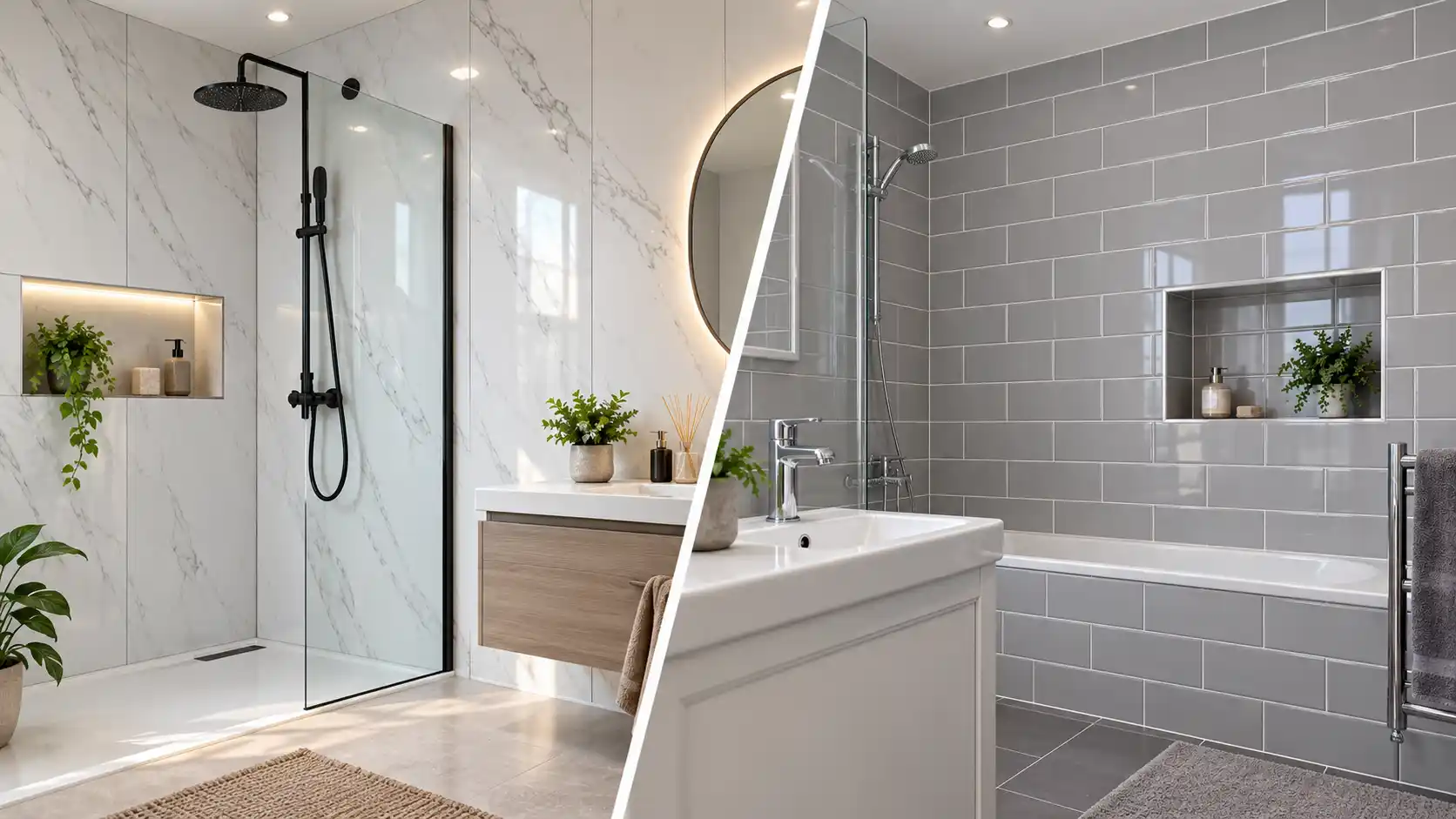
Bathrooms are one of the most common areas where homeowners and contractors compare PVC wall panels vs tiles. The walls need to cope with moisture while also being easy to clean and suitable for the overall bathroom design.
PVC bathroom wall panels can provide a practical wall finish for moisture-prone interiors. Their water-resistant properties make them worth considering for bathroom renovation projects.
Large-format panels can also create a more continuous surface than traditional individual tiles. This can give the bathroom a clean, contemporary appearance while reducing the number of visible joints.
GretaGrove’s PVC Wall Panels are designed for practical interior applications, including bathrooms and other areas where moisture resistance is important.
Tiles have been used in bathrooms for many years because they offer a wide range of colours, sizes, patterns and finishes. They can also create highly customised wall designs.
However, tiled bathrooms include grout lines that need regular cleaning and maintenance. Correct installation is also important to ensure the finished surface performs as intended.
If your priority is simple maintenance, water resistance and a practical wall covering, PVC panels are worth considering. They can also be useful when you want to refresh a bathroom without creating a heavily segmented tiled appearance.
If your priority is a specific tile pattern, format or traditional tiled aesthetic, tiles may be the better fit.
Whichever option you choose, check the product specification and installation requirements before starting the project.
The right installation is just as important as choosing the right wall finish.
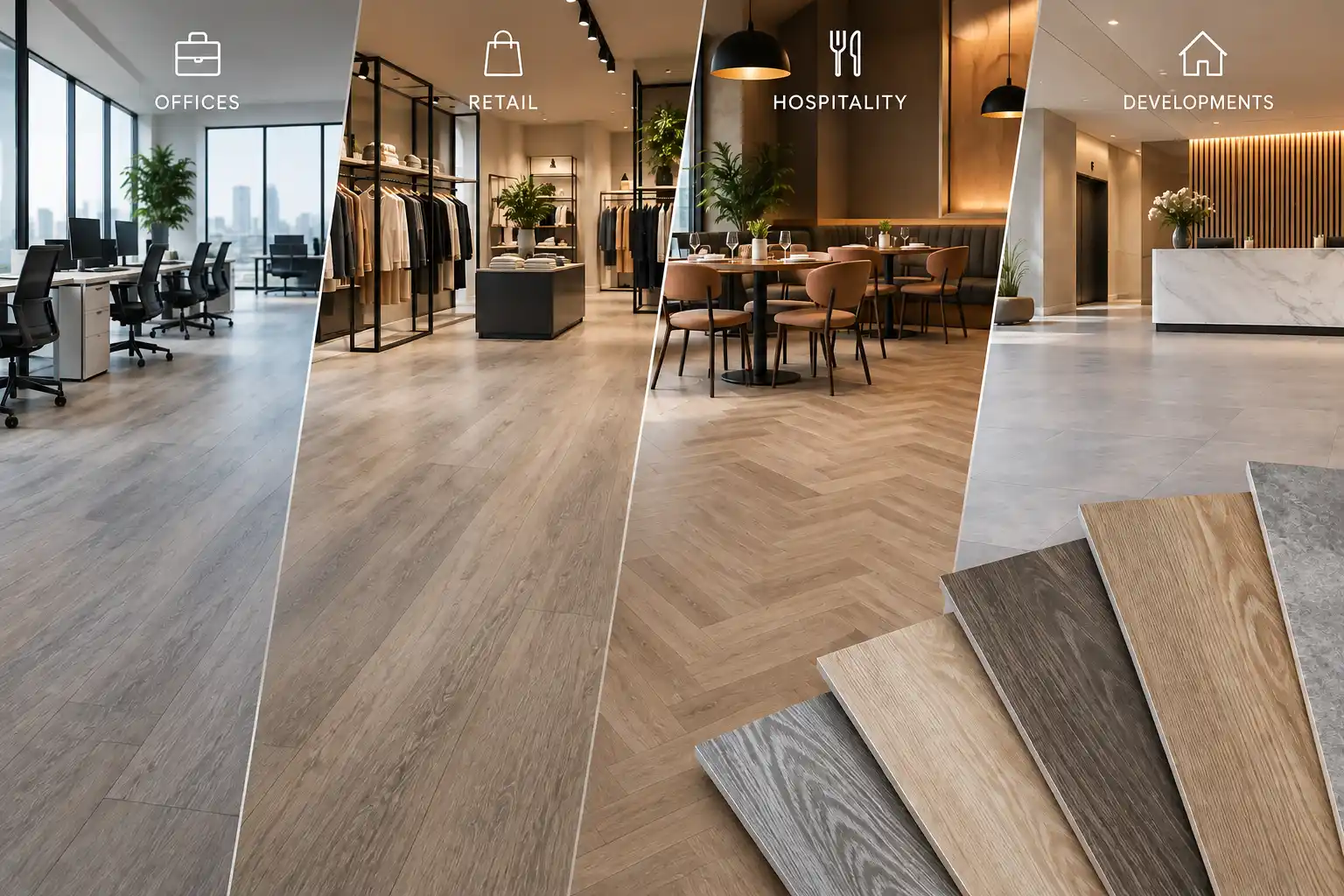
Commercial wall finishes need to balance appearance with practical performance. Offices, retail spaces, hospitality venues, rental properties and refurbishment projects can all have different requirements. Therefore, choosing between PVC wall panels vs tiles should start with the needs of the space.
PVC wall panels can be a practical choice for selected commercial interiors, particularly where moisture resistance, easy cleaning and straightforward installation are important.
They can be considered for areas such as bathrooms, kitchens, retail environments and refurbishment projects. Their range of decorative finishes also makes it possible to create a professional appearance without relying on a traditional tiled surface.
GretaGrove’s PVC Wall Panels range is designed for practical interior applications, including trade and commercial environments.
Tiles remain a widely used option for commercial interiors. They can provide a durable wall surface and offer extensive choices in colour, size, pattern and finish.
They can be particularly suitable where a project requires a specific tile design or a traditional tiled appearance. However, installation can involve more individual pieces, adhesive application and grout finishing.
For commercial refurbishment projects, installation time can have a direct impact on project planning. Businesses may want areas back in use as quickly as practical.
Large-format PVC panels can help cover larger wall areas with fewer individual pieces. This can make them worth considering when installation efficiency is an important project requirement.
Commercial spaces often require regular cleaning. Therefore, the wall finish should fit the cleaning routine of the business.
PVC panels can provide a smooth, low-maintenance surface in suitable applications. Tiles can also be straightforward to clean, although grout lines may require additional attention over time.
For contractors and trade buyers, the decision should be based on the complete project requirements rather than material price alone.
Considering these factors can help contractors and businesses make a more informed decision between PVC wall panels and tiles.
The choice between PVC wall panels vs tiles depends on what matters most for your project. Both can provide an attractive wall finish, but their practical benefits are different.
PVC wall panels can be a strong option when water resistance, easy maintenance and installation efficiency are important. They can work particularly well in bathrooms, kitchens, rental properties and selected commercial interiors.
They can also provide a clean, modern appearance with fewer traditional grout lines. This can be useful when creating a simple and consistent finish across larger wall areas.
Tiles may be the better choice when you need a specific size, pattern, texture or traditional tiled appearance. They offer extensive design possibilities and remain a popular option for many residential and commercial interiors.
| Your Priority | Option Worth Considering |
|---|---|
| Water-resistant wall finish | PVC wall panels |
| Simple routine cleaning | PVC wall panels |
| Large wall areas | PVC wall panels |
| Traditional tiled appearance | Tiles |
| Specific tile patterns or formats | Tiles |
| Commercial refurbishment | Depends on project requirements |
| Moisture-prone interior | Check the product specification |
For trade buyers, the final decision should not be based on the material alone. Consider the wall condition, installation method, labour, maintenance, product availability, quantity and intended application.
For example, a contractor working on a bathroom refurbishment may prioritise water resistance and installation efficiency. A designer working on a feature wall may place greater importance on a specific pattern or finish.
Ultimately, the best wall finish is the one that meets the requirements of the space while delivering the appearance and practical performance the project needs.
If PVC panels are the right fit for your project, explore GretaGrove’s PVC Wall Panels for available options and finishes.
It depends on the project. PVC wall panels can be a practical choice where water resistance, easy maintenance and installation efficiency are priorities. Tiles may be preferable when a project requires a specific tile format, pattern or traditional tiled appearance.
Many PVC wall panels are designed to resist water and moisture. However, the performance of the complete installation also depends on correct preparation, joints, edges and installation. Always check the specification of the individual product.
Yes. Suitable PVC wall panels can be used in bathroom interiors where moisture resistance is required. The selected product should be appropriate for the application and installed according to the manufacturer’s instructions.
PVC panels can be straightforward to clean because many designs provide a smooth surface with fewer traditional grout lines. Tiles are also easy to clean, but grout can require additional attention as part of routine maintenance.
Selected PVC wall panels can be suitable for commercial and trade interiors. They can be considered for applications such as bathrooms, kitchens, retail spaces and refurbishment projects, subject to the product specification.
Traditional PVC wall panel installations do not require the same grout finishing process used between conventional tiles. However, joints, corners and edges still need to be installed and finished according to the specific panel system.
Yes. PVC panels are available in different decorative designs and can reproduce the appearance of materials such as marble, stone and other finishes. This gives buyers an alternative to traditional tiled surfaces.
Durability depends on the individual product and installation. Tiles can provide a durable wall surface, while PVC panels can offer practical resistance to moisture and everyday surface wear. Always compare the specifications of the products being considered.
If your priorities are water resistance, straightforward cleaning and practical installation, PVC wall panels are worth considering. If you want a specific tile pattern, format or traditional tiled finish, tiles may be more suitable.
Choosing between PVC wall panels vs tiles depends on the needs of your space and the priorities of your project. Both options can create an attractive wall finish, but they offer different practical benefits.
PVC wall panels can be a strong choice where water resistance, easy maintenance and installation efficiency are important. They are worth considering for bathrooms, kitchens, rental properties and selected commercial refurbishment projects.
Tiles remain a versatile option for projects that require a traditional tiled appearance, specific formats or a particular pattern. They also offer a wide range of colours, textures and design possibilities.
For contractors, developers and trade buyers, the best approach is to compare the product specification, installation requirements, moisture exposure, maintenance and intended application before making a final decision.
If PVC panels suit your project, explore GretaGrove’s PVC Wall Panels range for practical interior wall-covering options.
You can also explore our other wall-panel solutions, including UV Panels and Vellura Solid Core Panels, depending on the requirements and design of your project.
For more trade-focused guidance, read our Wall Panel Supplier UK: The Complete Trade Buyer’s Guide.
With a focus on design innovation and material excellence, we create refined interior solutions, wall panels, flooring, and surfaces—that are timeless, functional, and built to last, shaping spaces that leave a lasting impression.
You May Also Like