SPC flooring vs laminate flooring is a common comparison for UK homeowners, landlords, contractors, property developers and commercial buyers choosing a practical floor finish. Both options can create an attractive, hard-wearing surface, but they are designed differently and perform differently in areas where moisture, heavy foot traffic and maintenance are important.
For some rooms, laminate flooring can be a practical and cost-effective option. However, SPC flooring offers advantages that can make it particularly suitable for kitchens, bathrooms, rental properties, commercial interiors and other spaces where water resistance and easy maintenance matter.
In this guide, we compare SPC flooring vs laminate flooring across the factors that matter most when planning a flooring project, including water resistance, durability, maintenance, installation, appearance and suitability for residential and commercial environments.
If you are new to SPC flooring, our SPC Flooring UK: The Complete Buyer’s Guide for Homes & Businesses provides a broader introduction to the product and its applications.
Next, we will look at exactly how SPC flooring and laminate flooring are constructed and why their different compositions affect their performance.
At first glance, SPC flooring and laminate flooring can look very similar. Both are available in wood-inspired designs and can be used to create a modern, finished appearance. However, their construction is different, which affects how each flooring type performs in everyday environments.
SPC flooring is a rigid flooring solution designed for durability and practical everyday use. Depending on the product, SPC flooring can feature a wear layer, decorative surface, rigid core and integrated backing layer.
For example, GretaGrove’s SPC flooring range includes products with a 0.55 mm wear layer and 1 mm IXPE backing. Selected products also feature a click-lock installation system, moisture and scratch resistance, and compatibility with underfloor heating.
One of the main reasons buyers consider SPC is its waterproof core. This makes it particularly useful for spaces where exposure to moisture is a consideration.
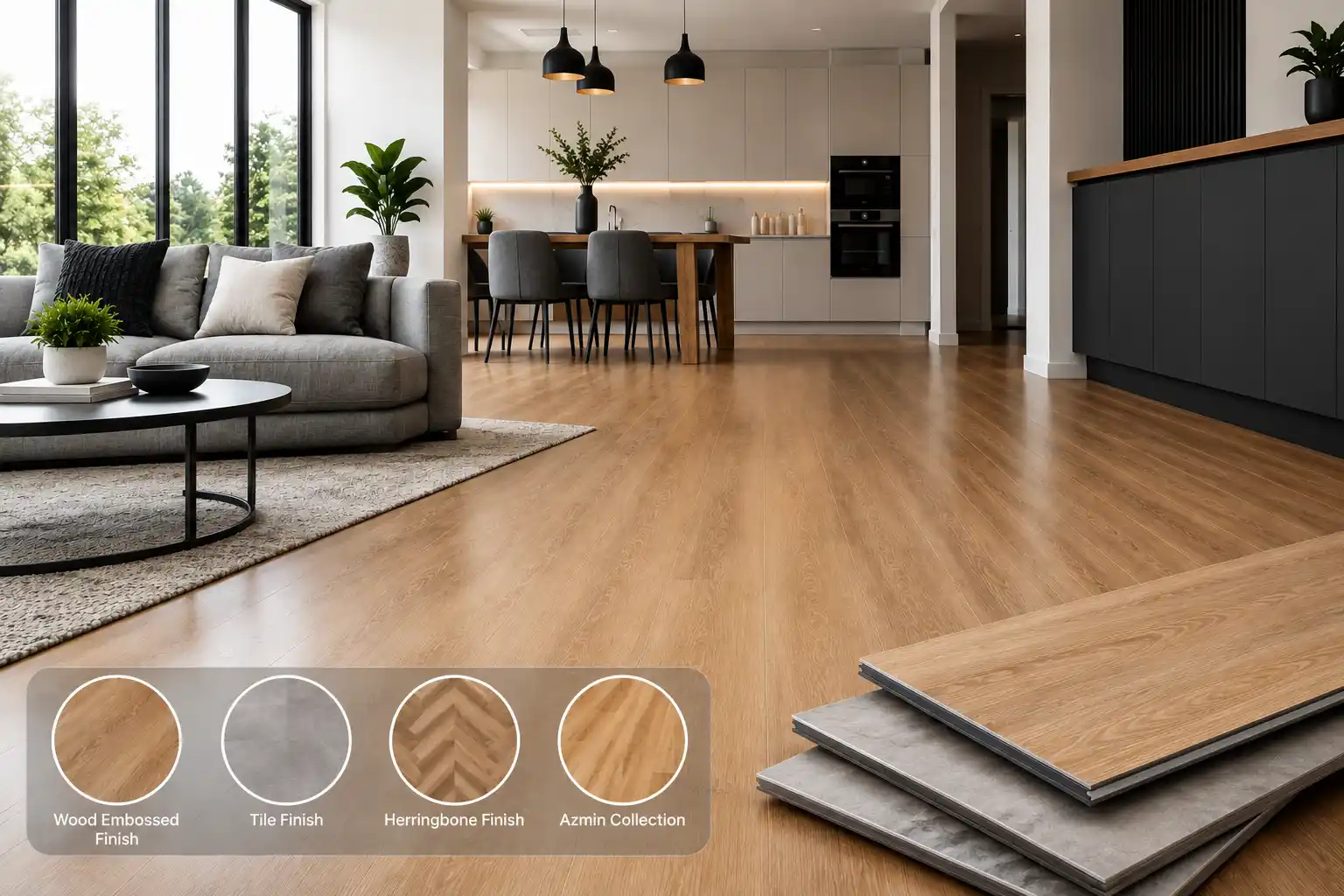
GretaGrove offers several styles, including Wood Embossed SPC Flooring, Tile Finish SPC Flooring, Herringbone SPC Flooring and the Azmin Collection.
Laminate flooring is a multi-layer flooring product that commonly combines a wood-based core with a decorative layer and a protective top surface. Its design layer can reproduce the appearance of timber, stone and other flooring materials.
Laminate has become a popular choice for residential interiors because it can provide the appearance of natural materials while offering a practical flooring surface.
However, its wood-based construction means that moisture exposure needs to be considered carefully. The suitability of laminate can vary depending on the product specification, room and installation conditions.
The difference in construction is important because flooring does more than determine how a room looks. It affects how the floor responds to water, everyday wear, cleaning and foot traffic.
This is why choosing between SPC and laminate should start with the requirements of the space rather than appearance alone.
When comparing SPC flooring vs laminate flooring, the biggest differences come down to how each material handles moisture, everyday wear, cleaning and different types of spaces. Looking at these factors can make it easier to decide which option suits your project.
| Feature | SPC Flooring | Laminate Flooring |
|---|---|---|
| Water resistance | Waterproof core makes it well suited to moisture-prone areas. | Water resistance varies by product and requires greater consideration around moisture. |
| Durability | Rigid construction and a protective wear layer provide a durable flooring surface. | Durable for many everyday residential applications, depending on specification. |
| Maintenance | Low-maintenance and easy to clean as part of normal floor care. | Generally straightforward to maintain, but moisture should be controlled. |
| Installation | Selected products use click-lock installation for practical fitting. | Many laminate products also use click-based installation systems. |
| Design | Available in wood, tile and herringbone-inspired finishes. | Available in a wide range of wood and other decorative designs. |
| Moisture-prone rooms | Particularly suitable where water resistance is a priority. | Product-specific suitability should be checked before installation. |
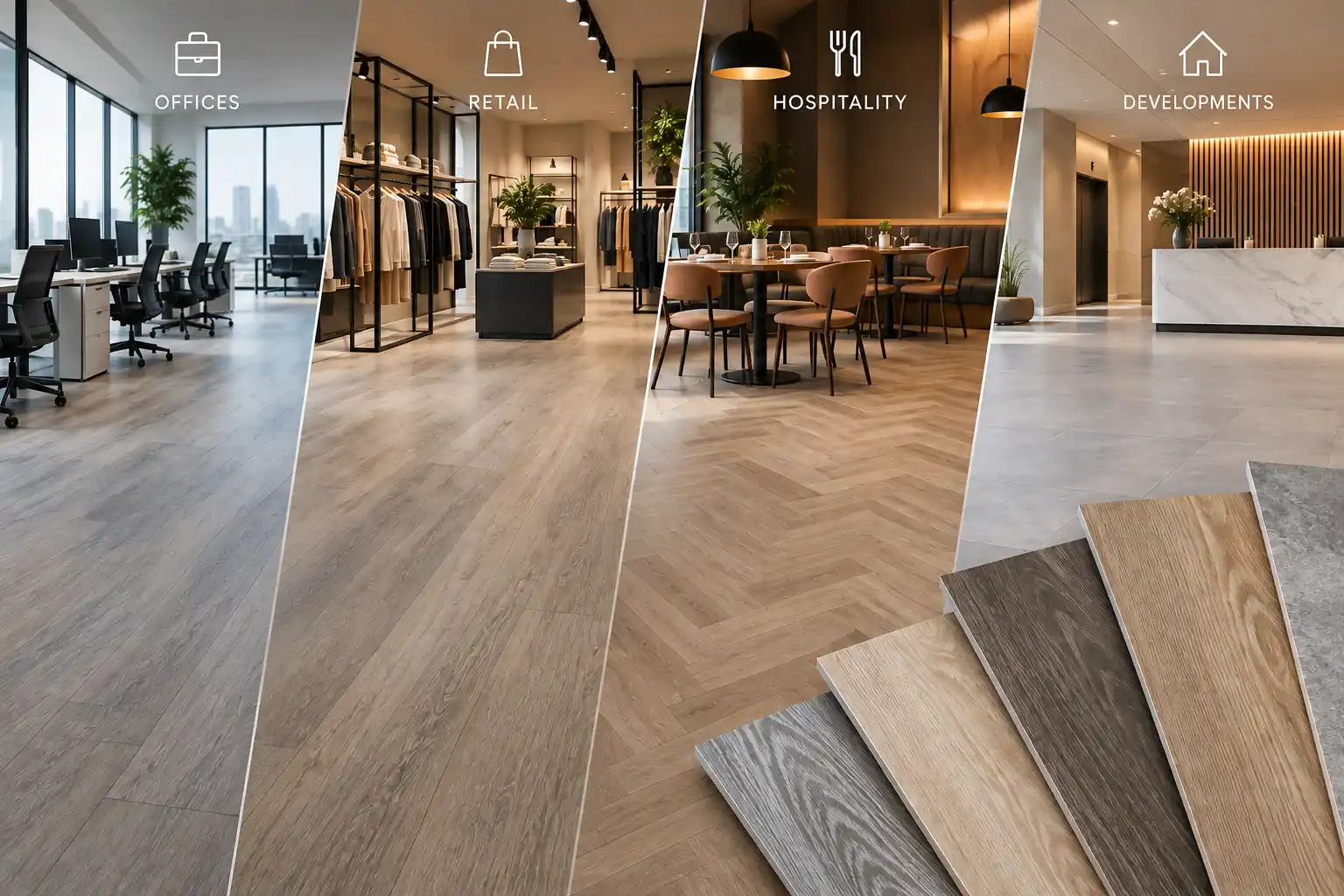
| Commercial use | Can be suitable for residential and commercial environments, depending on specification. | Can be suitable for commercial areas when the product meets the project’s requirements. |
The table provides a quick overview, but the most important difference for many UK buyers is how the flooring performs around moisture. This becomes particularly relevant in kitchens, bathrooms, utility areas and commercial spaces where cleaning or accidental spills are common.
Water resistance is one of the most important factors to consider when choosing between SPC flooring and laminate flooring. UK homes and commercial properties can have several areas where floors are regularly exposed to spills, damp footwear, cleaning water or everyday moisture.
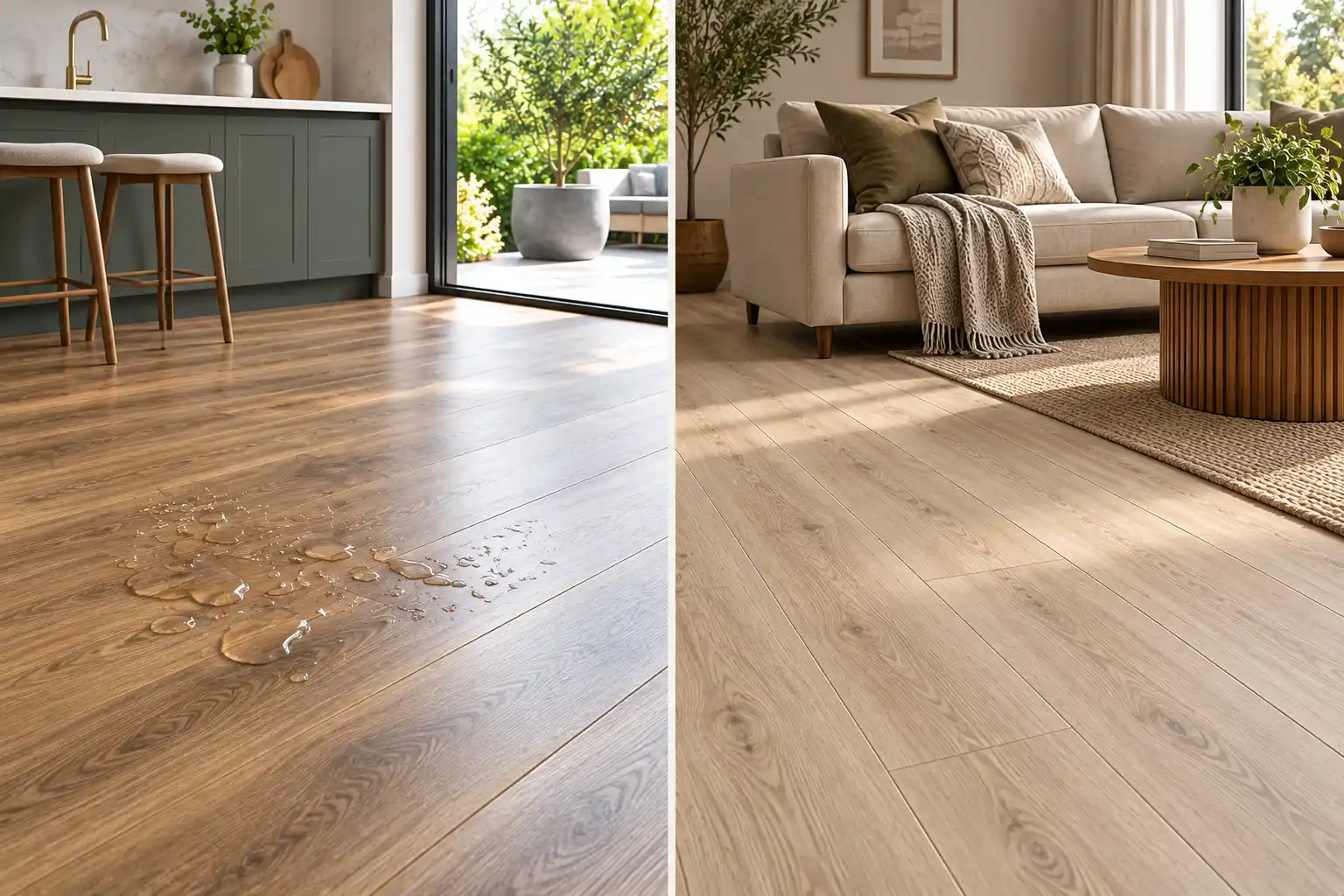
SPC flooring has a waterproof core, making it a practical option for areas where water resistance is a priority. This can make it particularly useful for kitchens, bathrooms, utility areas and other spaces where accidental spills may occur.
However, waterproof flooring does not mean that every part of an installation is automatically waterproof. The joints, perimeter and subfloor preparation still need to be handled correctly during installation.
Laminate flooring can perform well in dry areas, but its suitability around water depends on the specific product and its construction. Traditional laminate products typically contain wood-based materials, so prolonged moisture exposure can be a concern.
For this reason, buyers should always check the manufacturer’s moisture and installation specifications before using laminate in areas exposed to regular water.
If water resistance is a major requirement, SPC flooring generally has the more practical advantage because of its waterproof core.
For a bedroom, home office or other dry room, laminate may still be a suitable choice. For kitchens, bathrooms, rental properties or commercial environments where spills and frequent cleaning are more likely, SPC can provide greater peace of mind.
Explore GretaGrove’s SPC Flooring range to compare the available finishes and find an option suited to your project.
Flooring needs to cope with more than occasional foot traffic. In busy homes and commercial environments, floors can be exposed to shoes, furniture, spills, cleaning and repeated daily use. Therefore, durability is an important consideration when comparing SPC flooring vs laminate flooring.
SPC flooring is built around a rigid core and protective surface layer. GretaGrove’s SPC Medium Oak, for example, features a 0.55 mm wear layer designed to provide protection during everyday use.
This makes SPC a practical option for spaces where the floor needs to cope with regular activity. Depending on the product specification, it can be used in both residential and commercial environments.
For commercial projects, however, the individual product specification should always be checked against the expected level of foot traffic and the requirements of the space.
Laminate flooring can also provide a durable surface for everyday residential use. Its performance depends on factors such as the product’s construction, protective layer and intended use classification.
Higher-specification laminate can be designed for more demanding environments. However, moisture remains an important consideration when selecting laminate for areas where spills or frequent wet cleaning are expected.
Both SPC and laminate flooring can offer resistance to everyday surface wear, but performance varies between products. When comparing options, look beyond the appearance and check the manufacturer’s specification for wear resistance, scratch resistance and intended application.
For buyers looking for a combination of durability and water resistance, SPC can be particularly attractive. For dry areas with normal household traffic, a suitable laminate product may also provide the required level of performance.
Once flooring has been installed, everyday maintenance becomes an important part of the buying decision. A floor that is easy to clean can save time in busy homes, rental properties and commercial spaces.
SPC flooring is designed for low-maintenance everyday use. Regular sweeping or vacuuming can help remove dust and loose dirt, while routine cleaning can keep the surface looking fresh.
Its water-resistant properties also make SPC practical for areas where occasional spills are likely. However, cleaning products and methods should always follow the manufacturer’s recommendations to protect the flooring surface.
Laminate flooring is also relatively straightforward to maintain. Regular removal of dust and dirt helps reduce surface wear, while appropriate cleaning keeps the floor looking its best.
Because moisture can be a consideration with laminate, excess water should generally be avoided unless the specific product has been designed and approved for increased moisture exposure.
Both flooring types can be easy to maintain when installed and cared for correctly. However, SPC flooring offers an advantage in situations where water resistance is important.
This can be particularly useful for busy kitchens, utility spaces, rental properties and commercial interiors where spills and regular cleaning are part of everyday use.
Installation can have a significant impact on the time, labour and overall practicality of a flooring project. This is especially important for contractors, landlords, property developers and commercial buyers working with multiple rooms or larger spaces.
Many SPC flooring products use a click-lock installation system. This allows individual planks or tiles to connect together without requiring traditional fixing methods for every piece.
GretaGrove’s SPC flooring range includes click-lock products designed to make installation practical. However, correct subfloor preparation remains essential. The surface should be suitably prepared and the manufacturer’s installation instructions should be followed.
SPC flooring can also be cut and fitted around features within a room, although the tools and installation method will depend on the specific product.
Laminate flooring is also commonly available with click-based installation systems. This can make it a practical option for residential renovations and other flooring projects.
As with SPC, the quality of the finished installation depends on appropriate subfloor preparation, correct fitting and following the manufacturer’s installation requirements.
There is no universal winner based on installation alone. Both options can provide relatively straightforward installation when the right product and preparation are used.
For larger projects, however, buyers should consider more than installation speed. Moisture resistance, product specification, maintenance requirements, expected foot traffic and long-term suitability can all influence the total practicality of the flooring.
For contractors and trade buyers, selecting the right specification before ordering can also help reduce problems during installation and ensure the flooring is appropriate for its intended environment.
Flooring has a major influence on how a room looks and feels. For many buyers, the decision between SPC flooring vs laminate flooring is not only about performance. The colour, pattern, texture and overall style also need to work with the interior design.
Modern SPC flooring is available in a range of finishes that can suit different interior styles. Wood-inspired designs can create a warm, natural appearance, while tile-style finishes can provide a cleaner and more contemporary look.
At GretaGrove, buyers can explore several SPC flooring styles, including Wood Embossed Finish, Tile Finish, Herringbone SPC Flooring and the Azmin Collection.
Laminate is also widely recognised for its decorative flexibility. Many products are designed to reproduce the appearance of timber, allowing homeowners to achieve a traditional, contemporary or rustic look.
This makes laminate a strong option when visual appearance is a priority, particularly in dry residential spaces.
There is no single answer to which flooring looks better. SPC and laminate can both provide attractive finishes, so the decision should come down to the style you want alongside the practical requirements of the room.
If you want a wood-effect floor but also need strong water resistance, SPC can provide a useful combination of appearance and practical performance. If the flooring is being installed in a dry room, laminate may offer the look you want with a suitable product specification.
For homeowners, the right flooring choice depends on the room, lifestyle and level of everyday use. A bedroom may have very different requirements from a kitchen, hallway or open-plan living area.
SPC flooring can be a strong choice for moisture-prone areas because its waterproof core provides an important advantage over traditional wood-based flooring options.
It can also provide the appearance of timber or tile while offering a rigid and practical flooring surface. This makes it suitable for homeowners who want to combine style with everyday practicality.
Hallways, kitchens and open-plan living spaces can experience regular foot traffic. Choosing a flooring product with an appropriate wear layer and specification is therefore important.
SPC can be considered for these areas where durability, easy maintenance and moisture resistance are priorities. GretaGrove’s SPC Flooring collection includes different finishes to suit a range of interior styles.
Laminate can still make sense for dry rooms where moisture exposure is limited. Bedrooms, studies and other low-moisture areas may not require the same level of water resistance as a kitchen or bathroom.
The key is to select laminate that matches the room’s intended use and follow the manufacturer’s installation and maintenance requirements.
If your priority is water resistance, easy maintenance and a durable surface, SPC is worth serious consideration. If you are flooring a dry room and your main priorities are appearance and suitability for the space, laminate may also be appropriate.
Rather than choosing purely on appearance or initial price, consider how the floor will be used every day. This can help you select a flooring solution that is better suited to the room in the long term.
After comparing SPC flooring vs laminate flooring, the right option ultimately depends on the requirements of your project. There is no need to choose based on appearance alone. Consider where the flooring will be installed, how much use it will receive and how important water resistance is.
If the floor will be exposed to regular spills, moisture or frequent cleaning, SPC flooring can be a strong choice. Its waterproof core makes it particularly suitable for areas where water resistance is an important consideration.
SPC can also be a practical option for areas that experience regular foot traffic. Its rigid construction, protective wear layer and low-maintenance surface can make it suitable for busy homes and commercial interiors, provided the selected product meets the requirements of the application.
Laminate flooring can be a suitable option for dry rooms where moisture exposure is limited. It offers a wide range of decorative finishes and can work well when its specification matches the intended use of the space.
Before making a final decision, consider these factors:
For buyers who want a flooring solution with water resistance, durability and practical maintenance, SPC deserves close consideration. For dry spaces where those requirements are less important, laminate may remain a suitable alternative.
Explore the full SPC Flooring range from GretaGrove to compare available finishes for your project.
Neither option is automatically better for every project. SPC flooring can be the better choice where water resistance, durability and easy maintenance are priorities. Laminate can be suitable for dry areas when the product specification matches the intended application.
SPC flooring with a waterproof core is designed to resist water penetration through the flooring material. However, correct installation is still important. Joints, edges and the surrounding area should be installed according to the manufacturer’s instructions.
SPC flooring can be suitable for bathrooms when the specific product is approved for the application and installed correctly. Its water-resistant properties make it worth considering for areas where moisture is present.
It depends on the product. Some modern laminate flooring products have enhanced water resistance, while traditional laminate can be more vulnerable to prolonged moisture exposure. Always check the manufacturer’s specifications before installation.
Both can be relatively easy to maintain with appropriate cleaning and care. SPC flooring has an advantage where regular moisture or wet cleaning is a consideration, thanks to its water-resistant construction.
Yes, selected SPC flooring products can be suitable for commercial environments. The correct product should be chosen according to the expected foot traffic, wear requirements and intended application.
SPC flooring is available in wood-inspired finishes designed to create a natural timber-style appearance. GretaGrove offers Wood Embossed SPC Flooring alongside other finishes and styles.
Some SPC flooring products are compatible with underfloor heating. Always check the specification and installation guidance for the particular product before installation.
Durability depends on the specification of the individual product and the environment in which it is installed. SPC can be a strong option where a rigid construction, protective wear layer and water resistance are required, while suitably specified laminate can also perform well in appropriate environments.
The choice between SPC flooring vs laminate flooring comes down to the requirements of the space. Both can provide an attractive and practical flooring solution, but they have different strengths.
For areas where water resistance, durability, easy maintenance and everyday practicality are important, SPC flooring can be a strong option. Its waterproof core and rigid construction make it particularly suitable for kitchens, busy residential spaces and selected commercial applications.
Laminate flooring remains a practical choice for many dry interior spaces, particularly where moisture exposure is limited and the selected product meets the requirements of the room.
For contractors, property developers, landlords and homeowners, the best approach is to compare the product specification with the demands of the project before making a decision.
If SPC flooring is the right fit for your project, explore the GretaGrove SPC Flooring range to discover different finishes and styles. You can also explore our complete SPC Flooring UK buyer’s guide for more information about choosing and using SPC flooring.
Whether you are planning a home renovation, rental property upgrade or commercial project, choosing the right flooring starts with understanding the requirements of the space.
Explore GretaGrove’s SPC flooring options and find a finish that works for your project.
With a focus on design innovation and material excellence, we create refined interior solutions, wall panels, flooring, and surfaces—that are timeless, functional, and built to last, shaping spaces that leave a lasting impression.
You May Also Like