Modern interiors are not just about appearance. Sound quality also plays an important role in creating comfortable and functional spaces. In busy homes, offices and commercial environments, unwanted echoes and sound reflections can affect how people communicate and use a room.
Acoustic wall panels offer a practical way to manage sound reflections while adding a decorative feature to interior walls. Available in different materials, textures and finishes, they can complement a wide range of residential and commercial designs.
For trade buyers, contractors and interior designers, understanding the different types of acoustic wall panels, their benefits and suitable applications can help when selecting products for upcoming projects.
Let’s explore what acoustic wall panels are and how they work in modern interior spaces.
Acoustic wall panels are specially designed wall coverings that help absorb sound waves and reduce unwanted reflections within an indoor space. They are commonly used in rooms where clear communication and improved sound quality are important.
Unlike standard decorative wall coverings, acoustic panels are designed with materials and structures that help manage sound within a room. They are available in different sizes, thicknesses, colours and finishes to suit various interior styles.
When sound travels through a room, it can bounce off hard surfaces such as walls, ceilings and floors. These reflections can create echoes and increase reverberation
Acoustic wall panels absorb some of this sound energy, helping reduce reflections and create a more controlled listening environment. Their performance depends on the material, thickness, design and installation.
Acoustic treatment and soundproofing serve different purposes. Acoustic panels help manage sound reflections inside a room, while soundproofing aims to reduce sound travelling between separate spaces.
Installing acoustic wall panels alone will not completely block noise from entering or leaving a room. This distinction is important when selecting materials for residential, office and commercial projects.
Acoustic wall panels come in different materials, shapes and finishes to suit various interior requirements. Each type offers different design possibilities and acoustic characteristics, making product selection important for the intended application.
Fabric-wrapped panels typically feature an acoustic core covered with decorative fabric. They are available in different colours and sizes, making them suitable for offices, meeting rooms, studios and commercial interiors.
Polyester acoustic panels are manufactured using polyester-based fibres. They are available in different thicknesses, shapes and colours, offering flexibility for wall layouts and decorative applications.
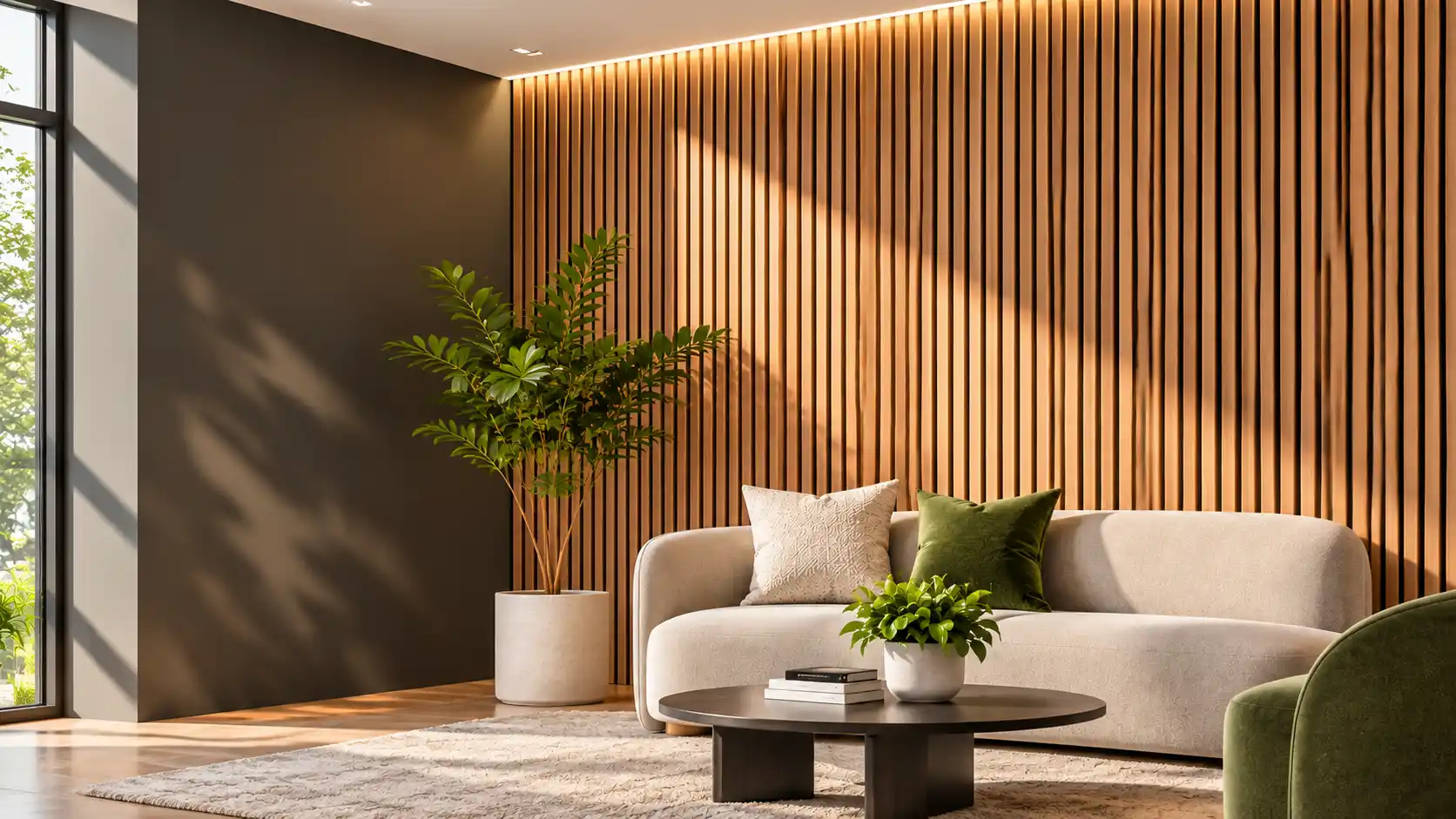
Wooden acoustic panels combine decorative wood finishes with acoustic materials. Slatted designs are particularly popular in contemporary interiors, where they add texture and visual interest to feature walls.
Acoustic foam panels are lightweight products commonly used in recording rooms, studios and selected workspaces. Their surface shapes and thicknesses vary depending on the intended acoustic application.
Decorative acoustic panels are designed to combine sound absorption with interior styling. They may feature geometric patterns, textured surfaces and different colours to complement modern residential and commercial spaces.
When comparing these options, consider the material, acoustic performance, fire-safety information, finish and installation requirements rather than choosing on appearance alone.
Acoustic wall panels offer both practical and decorative benefits for modern interiors. When selected and installed correctly, they can improve the acoustic environment while enhancing the overall appearance of a space.
One of the main benefits of acoustic panels is their ability to absorb sound reflections. This helps reduce excessive echo and reverberation, making conversations and other sounds clearer within a room.
In offices, meeting rooms and educational environments, excessive background reflections can make communication difficult. Acoustic panels help create a more controlled sound environment, supporting clearer conversations and presentations.
Acoustic panels are available in various colours, textures, patterns and finishes. Wooden slats, fabric surfaces and decorative designs can turn plain walls into attractive interior features.
In busy workplaces, managing sound reflections can help create a more comfortable environment for employees and visitors. This is particularly useful in open-plan offices, shared workspaces and meeting areas.
Different panel sizes, shapes and installation arrangements allow designers to create customised wall layouts. Acoustic panels can cover selected wall sections or form larger decorative features, depending on the project’s requirements.
However, the actual acoustic benefits depend on the panel’s tested performance, coverage area, room layout and installation method.
Acoustic wall panels are suitable for various residential and commercial environments where managing sound reflections is important. Their materials, finishes and installation options make them adaptable to different interior layouts.
Open-plan offices and shared workspaces can experience high levels of background noise and sound reflections. Acoustic wall panels can help manage reverberation, creating a more comfortable environment for everyday communication and collaboration.
Clear communication is essential in meeting rooms and conference spaces. Installing suitable acoustic panels can help reduce sound reflections, supporting clearer discussions, presentations and video conferences.
In residential interiors, acoustic panels can be used in living rooms, home offices and entertainment areas. Decorative wooden and fabric finishes can complement existing furniture while helping manage sound reflections.
Recording studios and media rooms often require careful acoustic treatment. Suitable acoustic panels can help control reflections and reverberation, supporting a more balanced listening and recording environment.
Restaurants, cafés, hotels and other hospitality environments can become noisy when multiple conversations take place at the same time. Acoustic wall panels can help manage sound reflections while adding decorative detail to interior walls.
Classrooms, training rooms and lecture spaces benefit from clear speech and communication. Appropriate acoustic treatment can help reduce excessive reverberation, making spoken information easier to hear.
Before selecting panels, assess the room size, existing surfaces, noise conditions and intended use to identify the most suitable acoustic solution.
Selecting the right acoustic wall panels requires more than choosing a colour or decorative finish. Trade buyers, contractors and interior designers should consider the room’s acoustic requirements, panel specifications and installation conditions before making a decision.
Start by assessing how the space is used and identifying common sound issues. Meeting rooms may require better speech clarity, while recording studios may need more controlled sound reflections.
Acoustic panels are available in fabric, polyester, foam and wood-based designs. Material composition and thickness can affect acoustic performance, so compare product specifications before selecting a suitable option.
Review the manufacturer’s acoustic test results, including the Noise Reduction Coefficient (NRC) where available. This rating provides an indication of how much sound a material absorbs under specified testing conditions.
Choose panel colours, textures and patterns that complement the surrounding interior. Wooden slat panels can create a contemporary feature wall, while fabric and polyester panels offer different decorative possibilities.
For commercial projects, check the relevant fire-performance documentation and building requirements. Also review panel dimensions, fixing methods, substrate compatibility and manufacturer installation instructions.
Comparing these factors helps ensure that the selected acoustic wall panels meet both the practical and visual requirements of the project.
Acoustic treatment and soundproofing are often confused, but they address different sound-related problems. Understanding the difference helps buyers choose suitable materials for their residential or commercial projects.
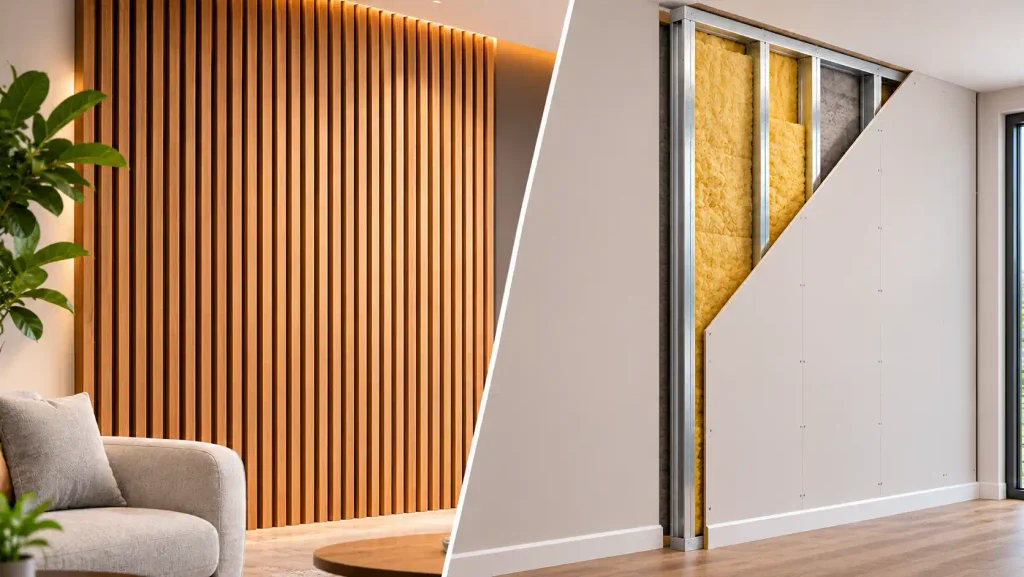
Acoustic wall panels are designed to absorb sound reflections within a room. They help reduce echo and reverberation, improving the acoustic environment in spaces such as offices, meeting rooms and studios.
Soundproofing focuses on reducing noise transmission between rooms or from external sources. Solutions may involve wall insulation, additional wall layers, acoustic sealing and specialised construction systems.
The right solution depends on the problem you want to address. If a room has excessive echo, acoustic wall panels may be suitable. If noise travels between neighbouring rooms, a properly designed soundproofing system may be required.
For projects involving both internal sound quality and noise transmission, acoustic treatment and soundproofing may need to be considered together.
Correct installation helps acoustic wall panels perform as intended while maintaining a neat and consistent finish. Before installation, review the manufacturer’s instructions and confirm that the selected panels are suitable for the wall surface.
Check that the wall is clean, dry and suitable for the chosen fixing method. Remove dust, loose materials and any surface imperfections that could affect panel placement.
Measure the installation area and plan the panel arrangement before fixing anything in place. Consider panel spacing, alignment, edges, corners and electrical fittings to achieve a balanced finish.
Depending on the panel design, installation may involve adhesive, mechanical fixings or a supporting framework. Always use compatible materials and follow the manufacturer’s installation guidance.
Regularly remove dust using a suitable soft brush or vacuum attachment. Cleaning methods depend on the panel material, so check the manufacturer’s care instructions before using liquids or cleaning products.
Check for loose edges, damaged surfaces and signs of wear. Addressing minor issues early can help maintain the appearance and condition of the installation.
Selecting acoustic wall panels without considering the room’s requirements can lead to disappointing results. Buyers and installers should review product specifications and installation details before making a purchase.
Acoustic panels help manage sound reflections, but they do not automatically prevent noise from travelling between rooms. Identify the actual noise problem before choosing a solution.
Decorative finishes are important, but acoustic performance should also be considered. Compare materials, thickness, acoustic ratings and intended applications before selecting a product.
The effectiveness of acoustic treatment depends partly on the room’s dimensions, surface materials and panel coverage. Consider the entire space rather than selecting panels without assessing the environment.
Commercial and public spaces may have specific fire-performance requirements. Check the relevant product documentation and applicable building regulations before specifying panels.
Incompatible adhesives, unsuitable fixings and poor wall preparation can affect the finished installation. Always follow the manufacturer’s recommended fixing method and preparation instructions.
Avoiding these mistakes helps trade buyers, designers and contractors make more informed product choices and plan installations more effectively.
Acoustic wall panels are increasingly considered in interior projects where sound management and visual design are equally important. For trade buyers, contractors and interior designers, selecting suitable products early can help streamline project planning.
For residential projects, acoustic panels can be incorporated into living rooms, home offices, bedrooms and entertainment spaces. Decorative finishes allow designers to create feature walls while addressing unwanted sound reflections.
Offices, hotels, restaurants and retail environments can benefit from acoustic treatments designed around their specific requirements. Panel selection should consider room usage, expected occupancy, acoustic performance and relevant safety standards.
Acoustic panels can also be considered during renovation work when existing rooms need improved sound control or an updated appearance. Before installation, assess the available wall space, existing finishes and compatibility with the selected fixing system.
For larger projects, contractors and installers should confirm panel dimensions, quantities, finishes and product availability before ordering. Reviewing technical specifications and installation requirements can also help avoid delays during project delivery.
Careful product selection allows acoustic wall panels to become part of a coordinated interior design and sound-management solution.
Acoustic wall panels are used to absorb sound reflections and reduce excessive echo within indoor spaces. They are commonly installed in offices, meeting rooms, homes, studios and commercial environments.
No. Acoustic wall panels primarily improve sound quality inside a room by reducing reflections and reverberation. Soundproofing requires additional measures designed to reduce noise transmission through walls, floors and ceilings.
The best option depends on the room’s purpose, acoustic requirements and interior design. Fabric, polyester, foam and wooden acoustic panels each offer different characteristics and finishes.
Some wooden slat panels incorporate an acoustic backing designed to absorb sound reflections. Their performance depends on the backing material, panel construction and installation. Check the manufacturer’s specifications before purchasing.
Yes. Acoustic panels can be installed in living rooms, home offices, entertainment rooms and other residential spaces where reducing echo is beneficial.
Yes. They are commonly used in offices, meeting rooms and shared workspaces to help manage sound reflections and improve speech clarity.
Cleaning depends on the panel material and finish. Dust can often be removed using a soft brush or suitable vacuum attachment. Always follow the manufacturer’s maintenance instructions.
The required quantity depends on room dimensions, existing surfaces, acoustic requirements and panel specifications. Assess the space and consult acoustic performance information before determining coverage.
Acoustic wall panels offer a practical way to manage sound reflections while adding decorative detail to modern interiors. From residential living spaces to offices, recording studios and commercial environments, different panel materials and finishes provide options for a wide range of projects.
Before choosing acoustic panels, consider the room’s requirements, material specifications, acoustic performance, fire safety and installation method. Selecting suitable products can help create more comfortable and visually appealing interior spaces
Explore GretaGrove to discover interior surface solutions and find products suited to your next residential or commercial project.