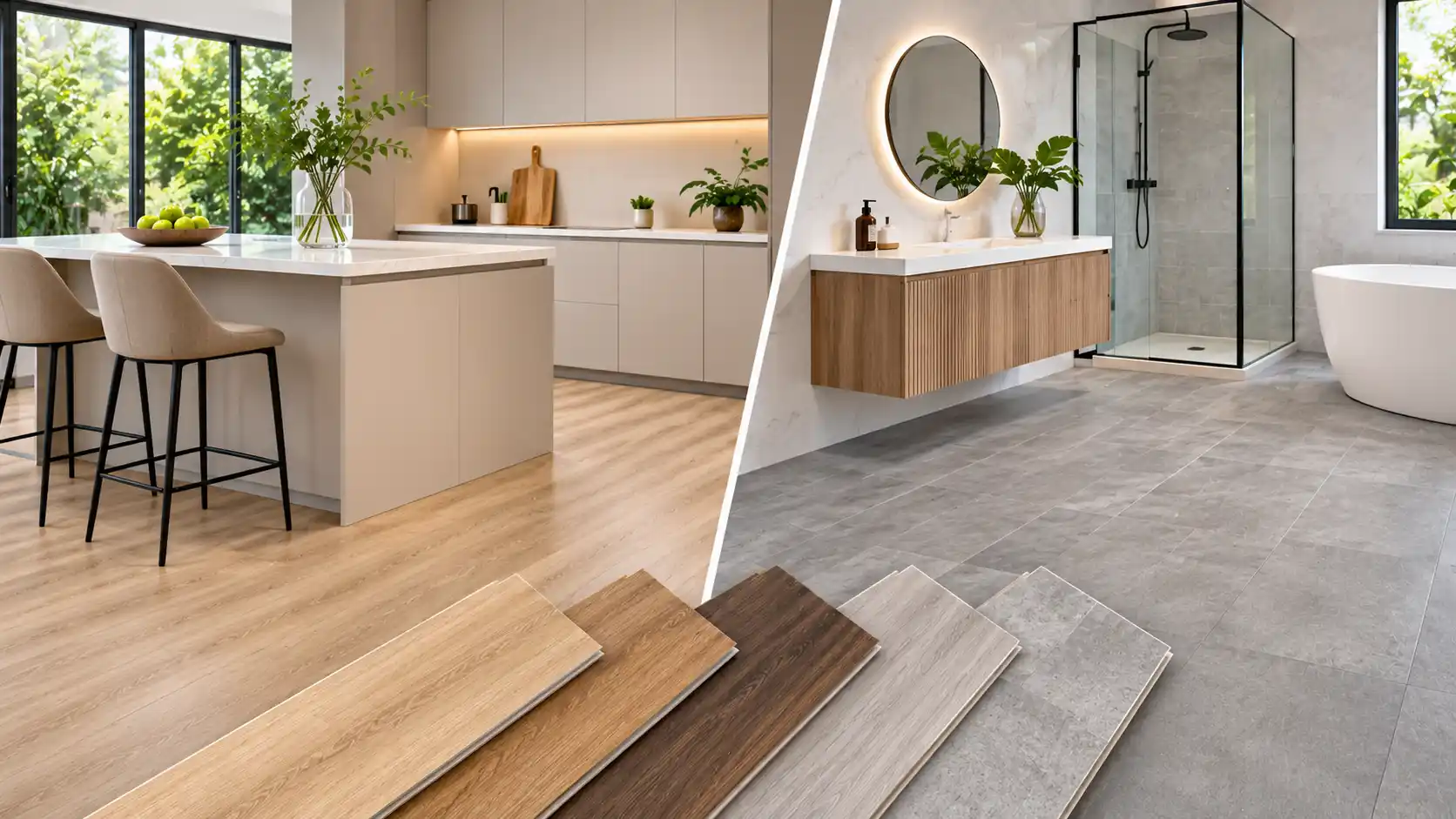
Kitchens and bathrooms require flooring that can handle regular use, moisture and everyday cleaning. Choosing the right material is important because these spaces are exposed to spills, splashes and changing indoor conditions. SPC flooring has become a popular option for modern interiors because of its rigid core construction and practical surface finishes.
However, not every SPC flooring product is suitable for every kitchen or bathroom. Before buying, it is important to check product specifications, water-resistance claims, wear layer thickness, slip resistance, and installation requirements.
In this guide, we explain what to consider when choosing SPC flooring for kitchens and bathrooms, helping homeowners, contractors and trade buyers make a more informed purchasing decision.
Key Takeaways
- Check the manufacturer’s water-resistance specifications before choosing SPC flooring.
- Compare wear layer thickness and overall product construction.
- Consider slip resistance, especially in areas exposed to splashes.
- Check installation requirements and subfloor preparation.
- Review maintenance instructions, warranties, and product suitability.
First, let’s understand why SPC flooring is considered for kitchens and bathrooms.
2. Why Choose SPC Flooring for Kitchens and Bathrooms?
SPC flooring is made with a rigid stone-plastic composite core, designed to provide a firm and stable flooring structure. Its construction and range of decorative finishes make it an option worth considering for kitchens and bathrooms.
2.1 Water-Resistant Flooring Construction
Many SPC flooring products are designed to resist water exposure, making them suitable for areas where everyday spills and splashes may occur. However, water resistance varies by product, and installation details remain important, particularly around edges and joints.
2.2 Rigid and Stable Core
The rigid core construction gives SPC flooring a firm structure. This can help the floor maintain its shape under normal household use when installed over a suitable, properly prepared subfloor.
2.3 Different Colours and Finishes
SPC flooring is available in a variety of decorative designs, including wood-effect, stone-effect and tile-effect finishes. These options make it easier to coordinate flooring with kitchen cabinets, bathroom fittings and interior styles.
2.4 Easy Everyday Cleaning
Most SPC flooring surfaces can be maintained through regular sweeping and cleaning with a suitable damp mop. Always follow the manufacturer’s cleaning instructions and avoid products that may damage the surface.
2.5 Suitable for Different Interior Styles
From contemporary kitchens to minimalist bathrooms, SPC flooring offers different visual options for residential interiors. Selecting the right colour, finish and plank or tile format can help create a consistent look throughout the space.
Although SPC flooring offers several practical features, its suitability depends on the exact product specifications. Before buying, there are several important details you should check.
3. Check the Water-Resistance Specifications Before Buying SPC Flooring
Water resistance is one of the most important factors to consider when choosing SPC flooring for kitchens and bathrooms. These areas regularly experience spills, splashes and moisture, so understanding the product’s water-resistance specifications is essential.
3.1 Understand the Product’s Water-Resistance Claims
Many SPC flooring products are marketed as waterproof or water-resistant because of their rigid composite core. However, buyers should check the manufacturer’s specifications rather than relying on general product descriptions.
3.2 Check the Joint and Locking System
SPC flooring commonly uses a click-lock installation system. Check how the joints connect and whether the manufacturer provides guidance on protecting edges and joints from water exposure.
3.3 Consider Bathroom Moisture Exposure
Bathrooms experience frequent splashes and higher humidity levels than many other rooms. Confirm that the selected flooring is approved for bathroom use and follow the recommended installation details around baths, showers and plumbing fixtures.
3.4 Check Edge and Perimeter Protection
Water can enter through exposed edges, expansion gaps and poorly finished transitions. Follow the manufacturer’s recommendations for perimeter detailing, trims and any required sealing materials.
3.5 Understand the Difference Between Waterproof Flooring and a Waterproof Room
Even when SPC flooring has a waterproof core, this does not automatically make the complete floor or room waterproof. Proper installation, joint detailing and suitable bathroom waterproofing measures remain important.
Before purchasing, review the technical datasheet and installation instructions to confirm that the flooring is suitable for your intended space.
4. Check the Wear Layer and Overall Flooring Thickness
Wear layer thickness and overall board thickness are important specifications to review when buying SPC flooring for kitchens and bathrooms. These details can help you understand the product’s construction and suitability for the expected level of use.
4.1 Understand the Wear Layer
The wear layer is the transparent protective surface above the decorative design. It helps protect the flooring against everyday surface wear, scuffs and scratches. Compare the wear layer specification across products before making a decision.
4.2 Choose a Suitable Wear Layer for Your Space
Kitchens often experience regular foot traffic, movement of chairs and occasional dropped items. Bathrooms may have different usage patterns but still require a suitable protective surface. Consider the manufacturer’s recommended applications when comparing wear layer options.
4.3 Check the Overall Flooring Thickness
SPC flooring is available in different thicknesses. Overall thickness can influence how the product fits with adjoining floors, door clearances and existing skirting. However, a thicker board does not automatically mean better surface protection or higher durability.
4.4 Check the Underlay Specification
Some SPC flooring products include an attached underlay, while others require a separate compatible underlay or no additional layer. Check the installation instructions before purchasing, as using an unsuitable underlay can affect the click-lock system.
4.5 Compare Product Specifications
Do not compare flooring products based on thickness alone. Review the wear layer, core construction, attached underlay, warranty and intended application together to understand what each product offers.
Checking these details helps you select SPC flooring that matches the practical requirements of your kitchen or bathroom.
5. Check Slip Resistance and Surface Finish
Kitchens and bathrooms are exposed to spills, splashes and moisture, so the surface finish of SPC flooring deserves careful consideration. A suitable finish should provide the appearance you want while meeting the practical requirements of the room.
5.1 Understand the Importance of Slip Resistance
Water on a smooth floor can increase the risk of slipping. Before buying SPC flooring, check whether the manufacturer provides slip-resistance information or test ratings for the product. Do not assume that every textured surface is automatically slip-resistant.
5.2 Compare Textured and Smooth Finishes
SPC flooring is available in different surface finishes, including smooth and textured designs. Textured finishes can provide a more natural appearance, while smoother finishes offer a different visual style. Compare the product specifications rather than choosing based on appearance alone.
5.3 Consider Wood and Tile Effect Designs
Wood-effect SPC flooring can create a warm, natural look in kitchens, while tile-effect designs offer a more traditional appearance suited to many contemporary interiors. Choose a finish that complements your cabinets, bathroom fittings, wall colours and overall design scheme.
5.4 Check How the Surface Handles Everyday Cleaning
Kitchen flooring may collect food spills, grease and dirt, while bathroom flooring can be exposed to soap residue and water marks. Review the manufacturer’s cleaning instructions to understand which products and methods are suitable for the selected surface finish.
5.5 Request Product Samples Before Buying
Where possible, request a sample before placing a larger order. Check its colour, texture and finish under the lighting conditions of the room. This is particularly useful for trade buyers, contractors and homeowners who need to confirm that the selected flooring matches the wider interior scheme.
6. Check Installation Requirements and Subfloor Preparation
Even good-quality SPC flooring can perform poorly if it is installed on an unsuitable surface or against the manufacturer’s instructions. Before buying, check the installation method, subfloor requirements and any additional materials needed for your kitchen or bathroom project.
6.1 Understand the Installation Method
Many SPC flooring products use a click-lock system, allowing individual planks or tiles to connect without traditional adhesive across the entire floor. However, installation methods vary between products. Confirm whether your chosen flooring is designed for floating installation, glue-down application or another specified method.
6.2 Check the Subfloor Requirements
The subfloor should meet the manufacturer’s requirements for cleanliness, dryness, stability and flatness. Remove loose debris and address cracks, movement or uneven areas before installation. Installing SPC flooring over an unsuitable surface can affect the locking joints and finished appearance.
6.3 Consider Existing Floor Coverings
Some SPC flooring products may be suitable for installation over certain existing hard floor surfaces, provided the original floor is stable, clean and sufficiently level. However, this is not suitable for every product or situation. Check the installation guide before covering tiles, concrete or another existing floor.
6.4 Check Underlay Requirements
Some SPC flooring products include an attached underlay, while others require a separate underlay or specify that additional underlay should not be used. Using an unsuitable underlay can affect floor stability and the locking system. Follow the product’s installation instructions rather than assuming that extra underlay will improve performance.
6.5 Allow for Expansion and Room Conditions
Depending on the product, installation may require expansion gaps around walls, door frames, pipes and other fixed objects. Check the recommended room temperature, acclimatisation requirements and expansion-gap measurements before starting. These details can vary between manufacturers.
6.6 Check Bathroom and Kitchen Installation Details
Pay particular attention to areas around sinks, baths, showers, appliances and plumbing connections. Flooring joints and perimeter details should be installed according to the manufacturer’s guidance. SPC flooring’s water-resistant properties do not remove the need for appropriate sealing and moisture management where specified.
7. Consider Design, Colours and Plank Formats
SPC flooring is available in a range of colours, patterns and formats, making it suitable for different kitchen and bathroom styles. However, choosing the right design involves more than selecting an attractive finish. Consider the room size, existing surfaces and the overall interior scheme.
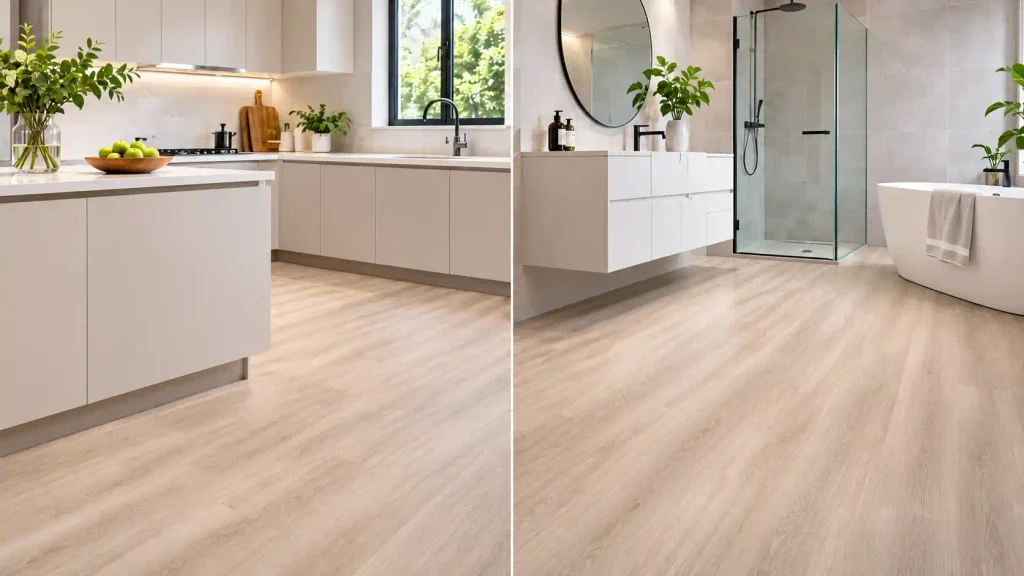
7.1 Choose a Colour That Suits the Room
Light-coloured SPC flooring can help create a bright, open appearance, particularly in smaller kitchens and bathrooms. Darker shades can add contrast and create a more defined look. Consider the amount of natural light, wall colours and fitted furniture before making your selection.
7.2 Compare Wood-Effect and Tile-Effect SPC Flooring
Wood-effect SPC flooring offers the appearance of timber, making it a popular option for warm and contemporary interiors. Tile-effect designs provide an alternative for buyers who prefer the appearance of stone or ceramic flooring without selecting traditional tiles. Compare the available finishes to find one that suits the intended space.
7.3 Select the Right Plank or Tile Format
SPC flooring is available in different plank and tile dimensions. Longer planks can create a more continuous appearance, while tile formats can suit interiors designed around stone or ceramic effects. Check the actual product dimensions and calculate how they will look within the room.
7.4 Consider the Room Size and Layout
The flooring format can influence how a room looks. Larger formats may create a less interrupted appearance in open spaces, while smaller formats can work well in compact or more detailed layouts. Consider doorways, narrow areas and fixed kitchen or bathroom fittings when planning the layout.
7.5 Match Flooring with Other Interior Finishes
Before choosing a design, compare the flooring with kitchen cabinets, bathroom furniture, wall panels, worktops and other finishes. Requesting a sample can help you assess how the colour and texture work together under the room’s actual lighting conditions.
8. Maintenance and Cleaning Requirements
Kitchen and bathroom floors need regular cleaning to manage everyday spills, dirt and moisture. Before choosing SPC flooring, check the manufacturer’s maintenance guidance to understand how to care for the surface and protect its appearance over time.
8.1 Check the Recommended Cleaning Methods
Most SPC flooring products can be maintained through routine sweeping or vacuuming with a suitable hard-floor setting, followed by damp mopping where permitted. Always follow the manufacturer’s instructions and avoid using excessive water during cleaning.
8.2 Choose Suitable Cleaning Products
Not every household cleaner is suitable for every flooring finish. Avoid abrasive pads, harsh chemicals and cleaning products that the manufacturer does not recommend. Using unsuitable products may damage the surface or affect its appearance.
8.3 Clean Spills and Standing Water Promptly
Although SPC flooring is commonly selected for its water-resistant construction, spills should still be cleaned promptly. Pay particular attention to water around sinks, baths, showers, appliances and floor edges. Persistent moisture can affect surrounding materials and areas that are not adequately protected.
8.4 Use Furniture Protection
Fit suitable protective pads beneath furniture legs and avoid dragging heavy appliances or furniture directly across the floor. Use appropriate floor protection when moving equipment during kitchen renovations or bathroom upgrades.
8.5 Follow Long-Term Care Recommendations
Regularly inspect the flooring for visible damage, gaps or movement around joints and edges. Follow the manufacturer’s advice for repairs and maintenance. Good installation, suitable cleaning products and routine care can help maintain the floor’s appearance.
9. Check the Warranty, Product Certification and Safety Specifications
Before purchasing SPC flooring for a kitchen or bathroom, review the product documentation carefully. Warranty coverage, technical specifications and safety information can help you assess whether the flooring is suitable for the intended installation.
9.1 Read the Product Warranty
Check how long the warranty lasts and whether it covers residential or commercial use. Some warranties may have different conditions depending on the installation environment. Read the exclusions carefully, particularly those relating to moisture, incorrect installation, subfloor conditions and maintenance.
9.2 Check the Manufacturer’s Technical Specifications
Review the product data sheet for details such as overall thickness, wear-layer thickness, surface finish, locking system and recommended applications. These specifications help you compare products using measurable information rather than relying only on marketing descriptions.
9.3 Review Slip-Resistance Information
For kitchens and bathrooms, ask whether the manufacturer provides slip-resistance test results or a recognised classification. Check what testing method was used and whether the results apply to the exact product and finish being considered.
9.4 Check Relevant Safety and Indoor-Air Information
Look for available product documentation relating to indoor-air emissions, material composition and applicable safety requirements. Where certifications or test reports are provided, check that they relate to the specific flooring product rather than assuming that every product in a manufacturer’s range has the same certification.
9.5 Confirm Commercial and Residential Suitability
If the flooring is intended for a commercial kitchen, bathroom or another high-traffic setting, confirm that the manufacturer approves it for that type of use. A product suitable for a residential bathroom may not meet the requirements of a busy commercial environment.
10. Common Mistakes to Avoid When Buying SPC Flooring
Choosing SPC flooring based only on appearance or price can lead to problems during installation and everyday use. Before making a purchase, review the product specifications and consider how the flooring will perform in the intended kitchen or bathroom environment.
10.1 Assuming All SPC Flooring Is Fully Waterproof
SPC flooring is commonly designed with a water-resistant rigid core, but this does not automatically make the entire floor installation waterproof. Water can still reach the subfloor through poorly fitted joints, exposed edges or unsuitable installation details. Check the manufacturer’s claims and installation guidance.
10.2 Choosing Flooring Without Checking the Wear Layer
Overall thickness alone does not tell you how resistant the flooring surface is to everyday wear. Compare the wear-layer specification and select a product appropriate for the expected foot traffic and intended use.
10.3 Ignoring Slip-Resistance Information
A floor that looks attractive may not be the most suitable choice for an area exposed to water. Check the manufacturer’s slip-resistance information instead of assuming that a textured finish guarantees safer footing.
10.4 Overlooking Subfloor Preparation
Installing SPC flooring over an uneven, damp or unstable subfloor can affect the finished result and potentially damage the locking joints. Inspect and prepare the surface according to the product’s installation requirements before fitting the flooring.
10.5 Selecting the Wrong Installation Accessories
Using an unsuitable underlay, adhesive or sealing material can affect installation quality. Confirm which accessories are required and whether the product has an attached underlay before purchasing additional materials.
10.6 Buying Without Reviewing the Warranty
Warranty terms can vary between manufacturers and product ranges. Check the coverage period, approved applications and exclusions before purchasing, particularly if the flooring will be installed in a bathroom or commercial setting.
10.7 Choosing a Product Based on Price Alone
A lower purchase price does not necessarily represent better value. Compare the wear layer, overall thickness, installation system, warranty and technical specifications. For trade buyers and contractors, also consider product availability, consistency between batches and the supplier’s ability to support repeat orders.
11. SPC Flooring for Kitchens and Bathrooms: FAQs and Conclusion
SPC flooring can be a practical option for kitchens because its rigid core is designed to resist moisture. However, check the product’s water-resistance specifications, wear layer and installation requirements before choosing it for your kitchen.
Some SPC flooring products are suitable for bathroom installations, but suitability depends on the manufacturer’s specifications and installation instructions. Pay particular attention to joint protection, perimeter sealing and areas exposed to frequent water.
The SPC core is generally water-resistant, but the complete floor installation should not automatically be considered waterproof. Water may pass through joints or exposed edges and reach the subfloor. Always check the manufacturer’s specific product claims.
There is no single thickness that is best for every kitchen or bathroom. Compare overall thickness, wear-layer thickness, locking-system quality and the manufacturer’s recommendations for the intended application.
It depends on the product. Some SPC flooring comes with an attached underlay, while others have specific requirements for a separate underlay. Check the installation guide before purchasing additional materials.
Regular sweeping or vacuuming and damp mopping with a suitable cleaning product are common maintenance methods. Avoid excessive water, abrasive cleaning tools and chemicals that are not approved by the manufacturer.
Not every SPC flooring product is designed for commercial environments. Check the manufacturer’s approved applications, wear-layer specifications, slip-resistance information and warranty conditions before specifying it for a commercial project.
Conclusion: Choose SPC Flooring Based on Performance, Not Just Appearance
SPC flooring can be a suitable choice for many kitchen and bathroom projects, offering a rigid core, a range of decorative finishes and practical cleaning requirements. However, the right product depends on more than its appearance or advertised water resistance.
Before buying, compare the wear layer, overall thickness, slip-resistance information, installation requirements, warranty and technical specifications. For contractors, retailers and trade buyers, checking these details helps ensure the selected flooring matches the project’s requirements.
Explore GretaGrove for flooring and interior surface solutions suitable for a range of residential and commercial projects.