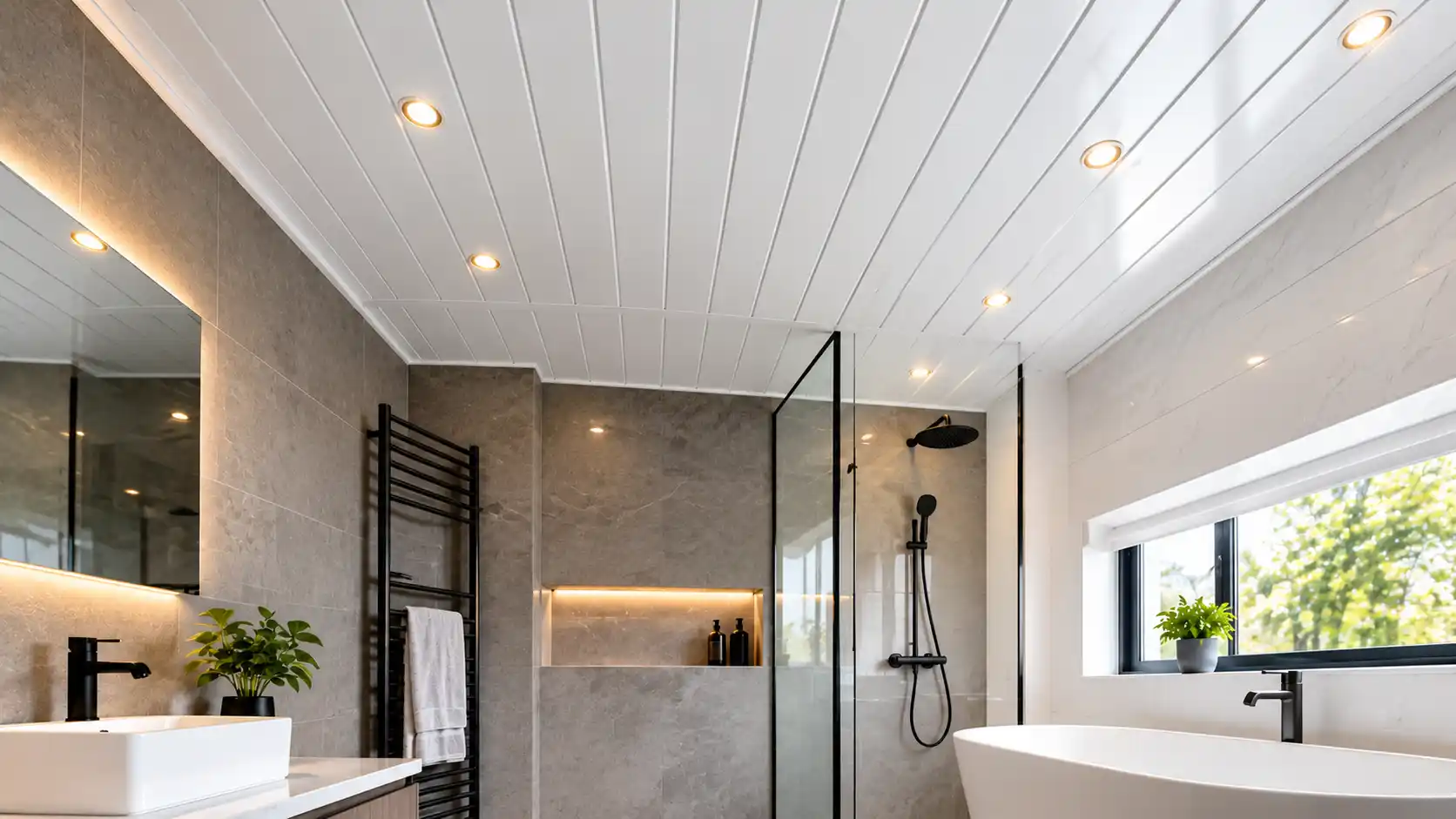
PVC ceiling cladding in the UK is an option for trade buyers looking for practical ceiling finishes for suitable residential and commercial interiors. Available in different styles and finishes, PVC panels can help create a clean, consistent appearance while offering straightforward maintenance when correctly specified and installed.
For contractors, installers and property developers, choosing the right ceiling cladding means considering the room, installation requirements, product specifications and overall project budget. This guide explains the main benefits, common applications and factors to consider before ordering.
First, let’s look at what PVC ceiling cladding is and how it works.
PVC ceiling cladding is a ceiling covering made from polyvinyl chloride (PVC). The panels are fitted to a suitable ceiling structure to create a finished surface in residential and commercial interiors.
For UK trade buyers, PVC ceiling panels are available in different colours, textures and designs. This makes them suitable for projects that require a neat, consistent ceiling finish without the appearance of traditional plaster.
PVC ceiling cladding can be used in suitable bathrooms, kitchens, utility rooms, rental properties and selected commercial interiors. Always check the product specifications to confirm suitability for the intended environment.
Installation typically involves preparing a suitable surface or supporting framework, measuring the ceiling, cutting panels to size and securing them according to the manufacturer’s instructions. Correct fixing, ventilation and finishing are important for a reliable result.
PVC ceiling cladding offers several practical advantages for suitable interior projects. For trade buyers, understanding these benefits helps determine whether the panels meet the project’s requirements.
Many PVC panels have smooth surfaces that are straightforward to clean using suitable products and manufacturer-recommended methods.
PVC ceiling panels are available in a range of finishes, allowing installers to match different interior styles and project specifications.
Panel dimensions and fixing systems can help installers plan ceiling coverage efficiently. However, installation time depends on the ceiling condition, layout and product requirements.
Some PVC ceiling panels are suitable for moisture-prone interiors. Trade buyers should confirm the product’s specifications and ensure the room has appropriate ventilation.
Before ordering, check panel dimensions, quantities, finishing accessories and availability. Careful planning helps reduce material waste and supports smoother project scheduling.
PVC ceiling cladding can suit several interior applications, provided the selected panels meet the requirements of the space.
Suitable PVC panels can provide a practical ceiling finish in bathrooms and utility rooms. Check moisture resistance, ventilation requirements and installation guidance before choosing a product.
PVC ceiling panels can be considered for suitable kitchen ceilings. Check the manufacturer’s guidance on heat exposure, particularly near cooking appliances.
Landlords and property managers may consider PVC cladding when updating ceilings in suitable interiors. Cleaning requirements, appearance and ease of maintenance should all be considered.
PVC ceiling cladding may be suitable for selected commercial spaces, depending on the building’s requirements. Check fire performance, relevant building regulations and any hygiene or safety standards before specifying panels.
Choosing the right PVC ceiling panels starts with understanding the project’s requirements. Trade buyers should compare product specifications before placing an order.
Measure the ceiling carefully and check each panel’s dimensions. Accurate calculations help estimate quantities and reduce unnecessary offcuts.
Select a finish that suits the interior design. Consider how the ceiling colour works with the walls, flooring and lighting.
Check the recommended fixing method, supporting structure and required accessories. The existing ceiling condition may affect preparation and installation time.
Confirm that the panels are suitable for the intended room. For commercial projects, review fire performance and any applicable building requirements.
Before confirming an order, check product availability, delivery times and whether matching trims or accessories are required to complete the installation.
When selecting a ceiling finish, trade buyers should compare PVC ceiling cladding with alternatives such as plaster and painted surfaces. Each option has different installation and maintenance requirements.
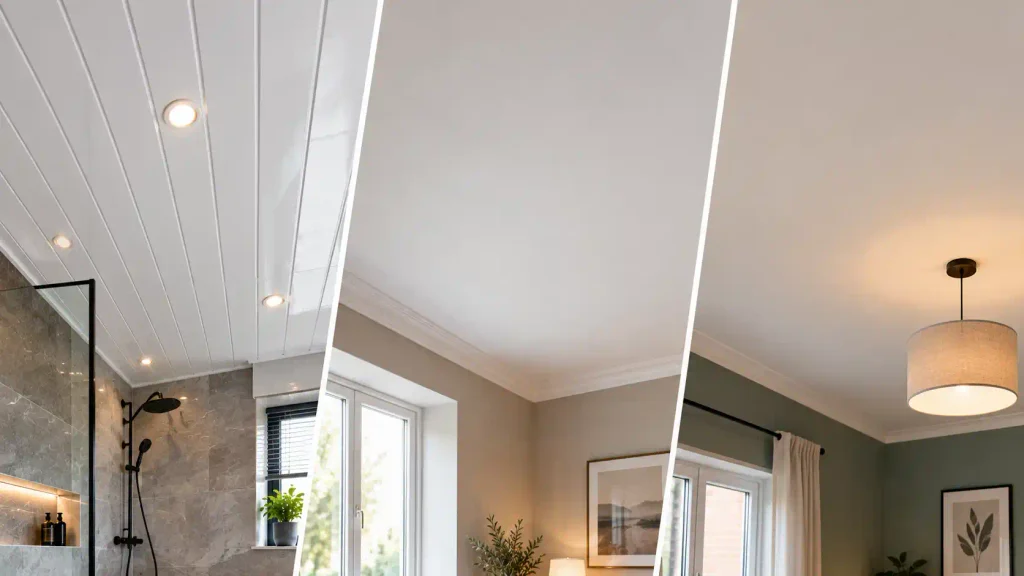
The right choice depends on the room, existing ceiling condition, desired appearance and project budget. For commercial properties, also check fire performance and relevant building requirements before selecting a ceiling system.
Correct installation helps PVC ceiling cladding deliver a neat, consistent finish. Trade buyers should review the manufacturer’s instructions before work begins, as fixing methods vary between products.
Inspect the existing surface and check whether a supporting framework is required. Resolve any underlying damp or structural issues before installing the panels.
Measure the ceiling and calculate the required panel quantity. Cut panels carefully to fit the layout, allowing for any clearances specified by the manufacturer.
Use the recommended fixings and installation method. Keep panels aligned and ensure each connection is secured correctly.
Fit compatible trims and finishing accessories for a clean appearance. Check the completed ceiling for secure fixings, consistent alignment and any gaps that need attention.
Careful product selection helps trade buyers avoid unnecessary costs and installation delays. Consider these common mistakes before ordering.
For commercial projects, check applicable fire-safety requirements and building regulations before specifying ceiling panels. Choosing products based on verified specifications helps support a more reliable installation.
Choosing a suitable PVC ceiling cladding supplier in the UK helps trade buyers plan projects around product requirements, quantities and delivery schedules.
Before placing an order, review the product details and calculate the quantity required for your project. This helps reduce avoidable delays and supports better material planning.
Some PVC ceiling panels are suitable for bathrooms. Check the manufacturer’s specifications for moisture resistance and installation requirements before choosing a product.
Many PVC panels have smooth surfaces that are straightforward to clean using suitable cleaning products and the manufacturer’s recommended methods.
They may be suitable for certain kitchen ceilings. Check the product’s heat-resistance guidance, particularly around cooking appliances.
Measure the ceiling area and check the coverage provided by each panel. Allow for cutting waste and consider the ceiling layout when calculating quantities.
Review panel dimensions, finish, installation instructions, product suitability, stock availability and delivery times. For commercial projects, also check applicable fire-safety and building requirements.
PVC ceiling cladding can provide a practical finish for suitable residential and commercial interiors. Before ordering, compare panel designs, dimensions, installation requirements, and product specifications to ensure they meet your project’s needs.
For trade buyers, checking stock availability, delivery times, and compatible accessories can also help keep installation plans on track. Choose products based on the requirements of the space and the manufacturer’s guidance.
Explore GretaGrove to discover available products for your next interior project.