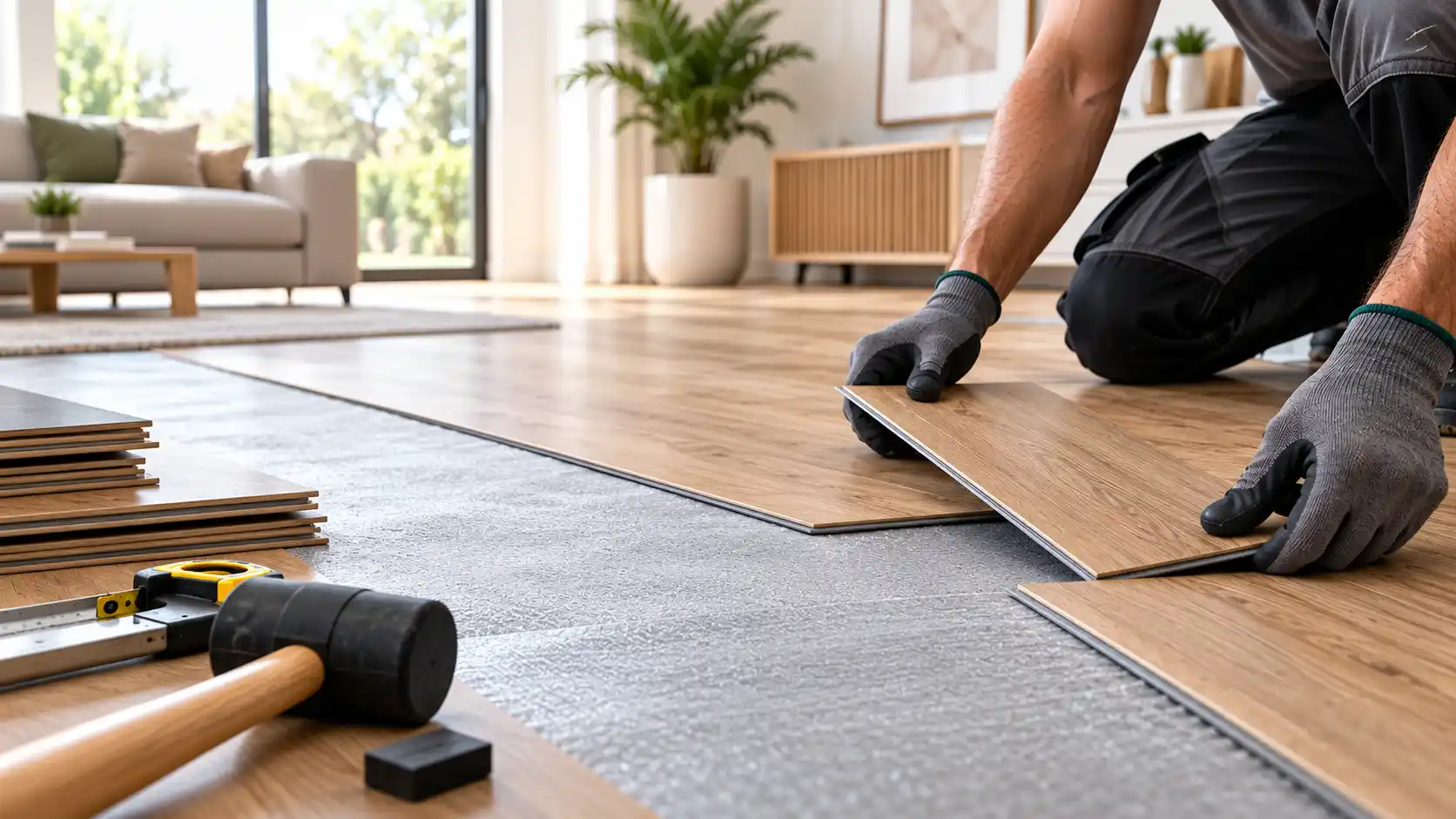
SPC flooring installation is a popular topic for homeowners, contractors, and trade buyers planning a flooring project. SPC, or stone plastic composite flooring, features a rigid core and is commonly supplied with a click-lock fitting system. The correct installation method depends on the product, subfloor and room conditions.
Whether you are updating a home, preparing a rental property or fitting out a commercial interior, careful preparation helps achieve a neat finish. This guide covers the key stages of SPC flooring installation, including subfloor checks, layout planning, fitting and common mistakes to avoid.
First, let’s look at SPC flooring and what makes it different from other flooring options.
SPC flooring stands for stone plastic composite flooring. It features a rigid core designed to provide dimensional stability and a firm feel underfoot. Many SPC products use a click-lock system, making installation straightforward when the subfloor and room conditions meet the manufacturer’s requirements.
SPC flooring is available in a range of wood-effect, stone-effect and contemporary finishes. It can suit various residential and commercial interiors, depending on the product’s performance specifications.
Trade buyers and homeowners often consider SPC flooring for its rigid construction, design options and ease of routine maintenance. Many products are also water-resistant, but suitability for wet areas depends on the complete flooring system and installation details.
Before choosing SPC flooring, consider the room, expected foot traffic, subfloor condition and installation method. Always check the manufacturer’s guidance for suitability, underlay requirements and any restrictions on use.
Subfloor preparation is one of the most important stages of SPC flooring installation. An uneven or unsuitable surface can affect the locking joints and the finished floor.
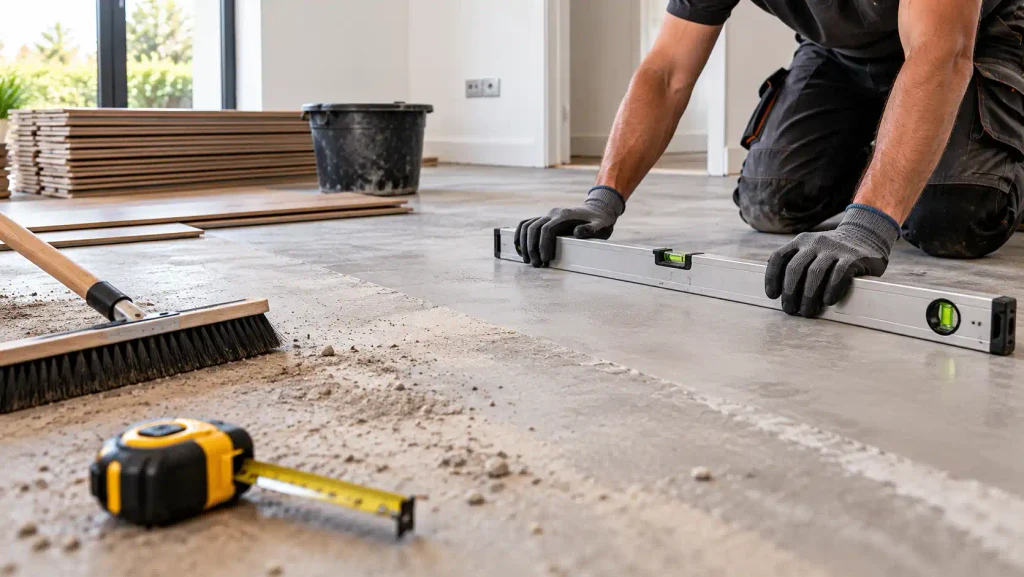
Remove dust, dirt, debris and loose materials before installation. The subfloor should be clean and dry, following the flooring manufacturer’s requirements.
Use a suitable straightedge or level to identify uneven areas. Correct any irregularities within the tolerances specified by the manufacturer before laying the flooring.
Inspect the subfloor for dampness and address any underlying moisture issues. Concrete subfloors may require moisture testing and an approved moisture-control system, depending on the product instructions.
Check whether the existing surface is suitable for installation. Remove loose or damaged sections and confirm whether the manufacturer’s instructions permit fitting SPC flooring over the existing material.
Having the right tools and materials ready before starting can help installers work more efficiently and achieve a consistent finish.
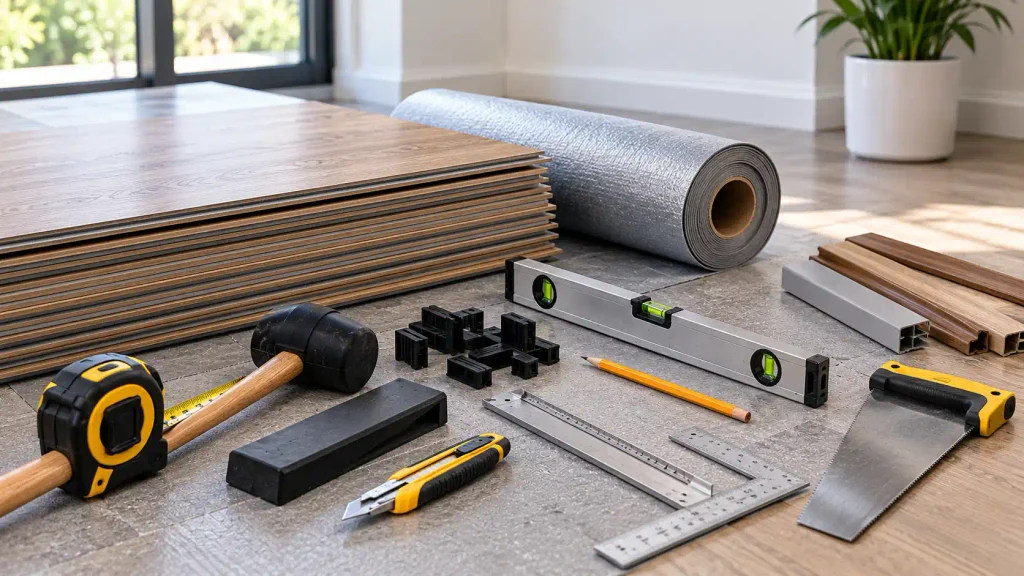
Requirements vary between flooring systems. Check the product instructions before purchasing underlay, adhesives or accessories, as some SPC floors have an attached underlay or specific installation requirements.
SPC flooring installation requires careful measuring, correct plank alignment and secure locking joints. Always follow the instructions supplied with your specific flooring product.
Measure the room and calculate the number of planks required. Plan the starting position to avoid narrow cuts along the walls and create a balanced finish.
Position the first row according to the manufacturer’s guidance. Use spacers to maintain the required expansion gap around the room’s perimeter.
Connect the planks using the recommended click-lock method. Keep the joints aligned and check that each plank locks securely without damaging the edges.
Work row by row, staggering end joints according to the product instructions. Check alignment regularly and cut planks carefully around doorways and other obstacles.
Remove the spacers and install compatible skirting or finishing trims. Check the floor for gaps, damaged edges, and poorly connected joints before moving furniture back into the room.
A successful SPC flooring installation depends on proper preparation and careful fitting. Avoiding common mistakes can help prevent unnecessary repairs and delays.
Before finishing, inspect the entire floor and confirm that all planks are fitted correctly. Following the manufacturer’s instructions helps reduce the risk of installation problems.
SPC flooring can suit a range of interiors, but the correct product must match the room’s conditions and expected use.
SPC flooring offers wood-effect and contemporary finishes for living rooms and bedrooms. Check the manufacturer’s guidance for underlay, expansion gaps and installation requirements.
Many SPC products are designed to resist water, making them an option for suitable kitchens. Clean spills promptly and follow the product’s care instructions.
Only use SPC flooring in bathrooms when the manufacturer confirms it is suitable for that environment. Pay particular attention to perimeter sealing, standing water and installation restrictions.
For offices, retail units and other commercial interiors, check the product’s wear rating, expected foot traffic and suitability for the intended use. Confirm any relevant fire-performance and building requirements before installation.
Regular maintenance helps keep SPC flooring looking its best after installation. Follow the manufacturer’s care instructions to protect the surface and maintain its appearance.
For rental properties and commercial interiors, establish a simple cleaning routine that suits the level of foot traffic. Regular checks can also help identify damaged planks or joints that need attention.
Choosing a suitable SPC flooring supplier in the UK helps homeowners, contractors and trade buyers source flooring that meets their project requirements.
For larger projects, calculate the required quantity carefully and allow for cutting waste. Confirm that sufficient stock is available to complete the installation with a consistent finish.
Many SPC flooring products use a click-lock system that simplifies fitting. However, preparation, accurate measurements, and following the manufacturer’s instructions remain essential.
Underlay requirements vary by product. Some SPC flooring includes an attached underlay, while other products require a specific compatible option. Always check the installation guidance.
This depends on the existing surface and the SPC product. Check whether the manufacturer permits installation over the material and ensure the subfloor meets the required conditions.
Installation time depends on the room size, subfloor preparation, layout and installer experience. Repairs or levelling may add time to the project.
Many SPC products have water-resistant or waterproof surfaces, but the complete floor system may not be waterproof. Check the manufacturer’s specifications, especially for bathrooms and areas exposed to standing water.
Successful SPC flooring installation starts with choosing a suitable product and preparing the subfloor correctly. Accurate measurements, secure locking joints and the correct expansion gaps help create a neat, consistent finish.
For UK homes and commercial projects, always follow the manufacturer’s installation and maintenance instructions. Check product specifications, availability, and compatible accessories before ordering.
Explore GretaGrove to discover flooring options for your next interior project.