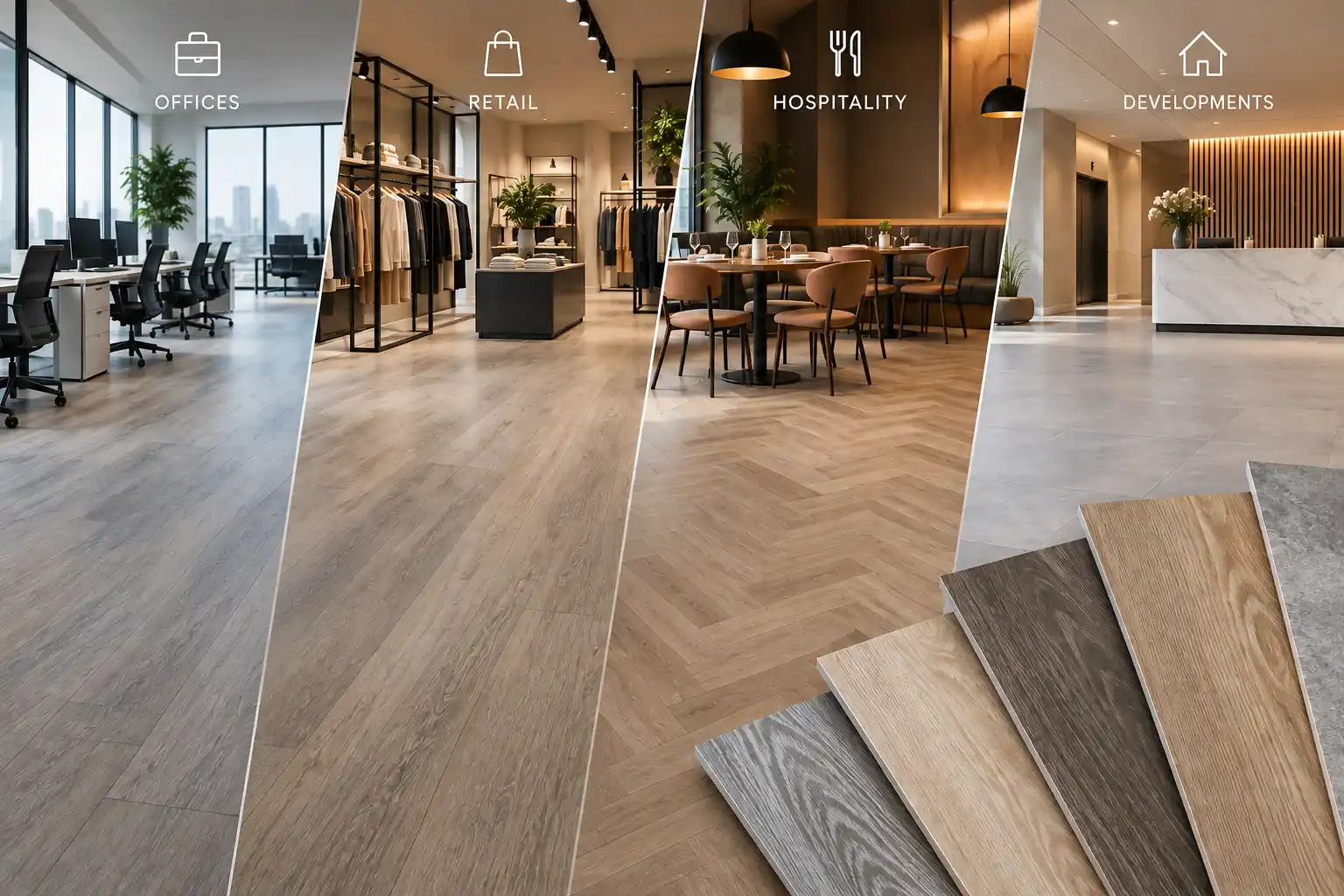
Commercial flooring UK needs to do more than look good. Offices, retail spaces, hospitality venues, rental properties and new developments all place different demands on a floor. Foot traffic, moisture, cleaning, maintenance and installation requirements can all affect which flooring solution is suitable.
For trade buyers and businesses, choosing flooring is also a project decision. The right product needs to match the environment, expected level of use and overall specification. This becomes even more important when ordering flooring for multiple rooms, properties or larger commercial developments.
In this guide, we explore the key factors to consider when choosing commercial flooring in the UK. We will look at different flooring options, where SPC flooring can be used, and what contractors, developers and business owners should consider when selecting a commercial flooring supplier.
Before choosing a product, it is useful to understand exactly what makes flooring suitable for a commercial environment.
Commercial flooring refers to flooring products selected for business and professional environments rather than private residential spaces. These environments can include offices, retail stores, showrooms, hotels, restaurants, rental properties and property developments.
Unlike a typical home flooring project, commercial projects often need to account for higher foot traffic, frequent cleaning, longer operating hours and different maintenance requirements. The flooring therefore needs to be selected according to how the space will actually be used.
The main difference is not simply the type of building. It is the level and nature of use.
A residential floor may primarily need to cope with household foot traffic and occasional spills. A retail store, office or hospitality venue can experience significantly more regular movement throughout the day.
For this reason, trade buyers should look at factors such as wear resistance, water resistance, maintenance, installation and product suitability before selecting a flooring solution.
There is no single flooring product that works for every commercial environment. A quiet office may have different requirements from a busy shop, while a rental development may have different priorities again.
When planning a commercial flooring project, consider:
Understanding these requirements before ordering can help contractors, developers and business owners choose a flooring solution that is appropriate for the space rather than simply choosing the most attractive option.
Choosing commercial flooring requires more than finding a finish that looks good. A suitable floor should work with the demands of the environment, from daily foot traffic to cleaning routines and moisture exposure.
Commercial spaces can experience regular foot traffic throughout the working day. Flooring should therefore have a specification that matches the expected level of use.
For trade buyers, it is important to check the product’s wear layer, construction and intended application rather than assuming that every flooring product will perform in the same way.
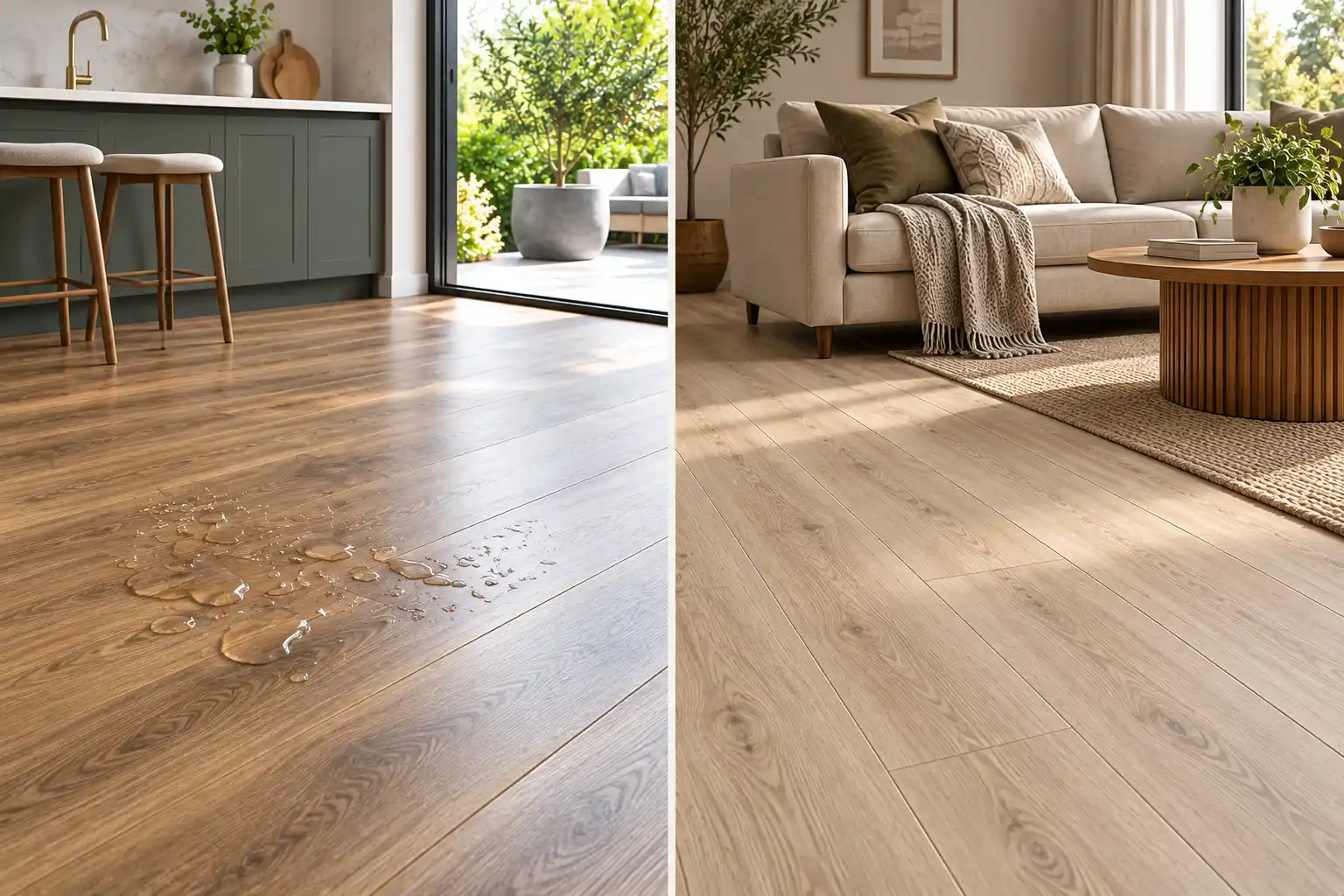
Moisture can be a consideration in many commercial environments. Shops, hospitality spaces, kitchens, entrances and areas that require regular cleaning may be exposed to spills or water more frequently than a typical dry room.
Where water resistance is a priority, SPC flooring can be an option worth considering. Products with a waterproof core can provide an additional practical advantage in suitable applications.
Businesses need flooring that can be maintained as part of their normal cleaning routine. A low-maintenance surface can be particularly useful in spaces that need to remain presentable throughout the day.
Before choosing a product, check the manufacturer’s cleaning and maintenance recommendations. Using the correct cleaning methods can help maintain the flooring’s appearance and performance.
Not every commercial space receives the same level of traffic. An office meeting room, retail showroom and busy entrance can have very different requirements.
Consider how many people will use the space, how frequently it will be used and whether furniture or equipment will regularly move across the floor. This information can help determine the appropriate product specification.
Installation requirements can also influence the choice of commercial flooring. For refurbishment projects, businesses may need a practical installation system that fits the project’s schedule.
Click-lock flooring can be useful in suitable projects, but the subfloor still needs to be properly prepared. Always follow the installation instructions for the specific flooring product.
There is no single flooring solution for every commercial project. The right choice depends on the environment, expected foot traffic, moisture exposure, design requirements and maintenance routine.
SPC flooring is a rigid flooring option that can be suitable for selected commercial interiors. Its waterproof core, protective wear layer and range of decorative finishes make it a practical choice where durability and water resistance are important.
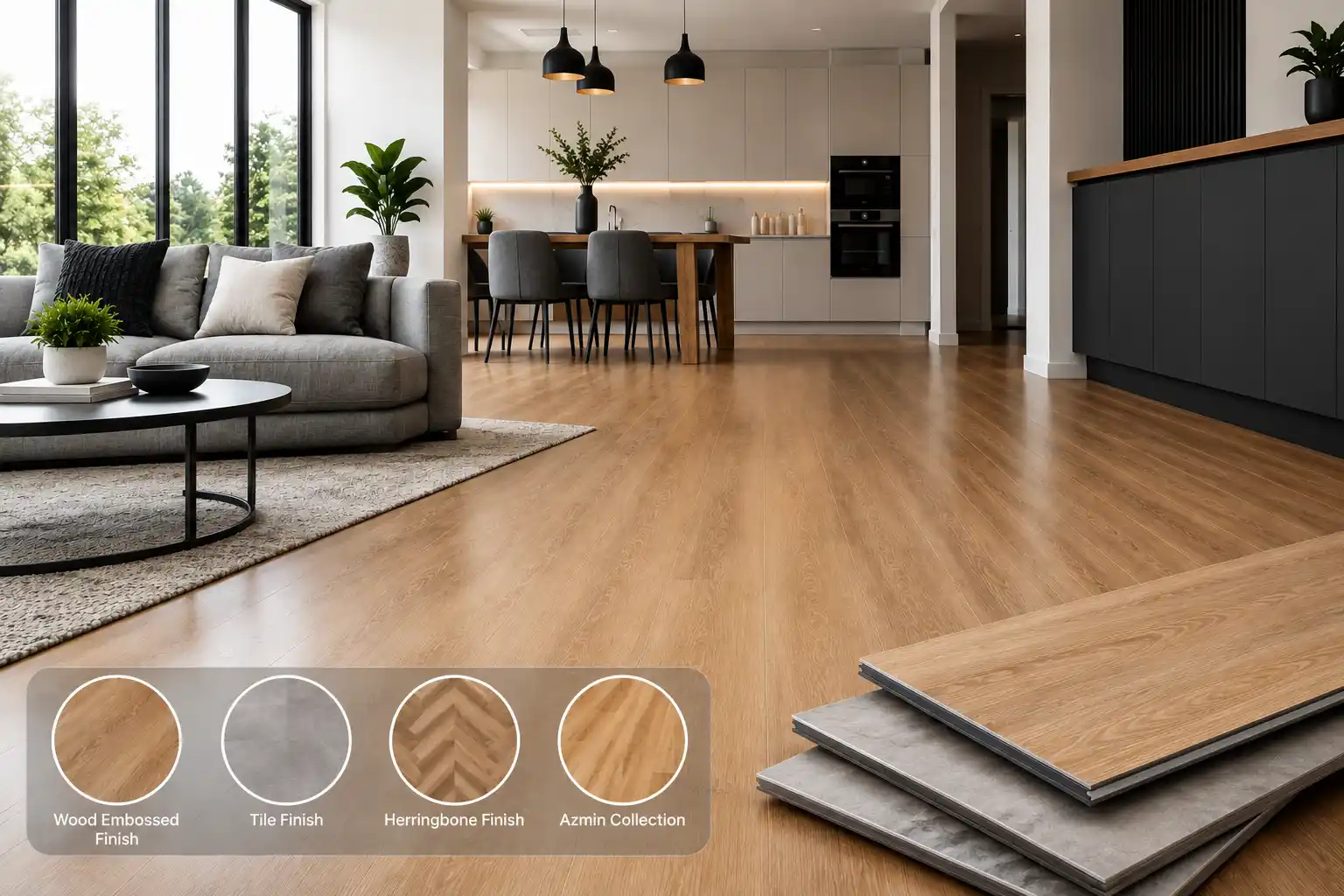
GretaGrove offers a range of SPC Flooring options, including wood, tile and herringbone-inspired finishes.
Wood-effect flooring can help businesses create a warm and professional interior without using natural timber throughout the space. It can work particularly well in offices, showrooms, reception areas and other customer-facing environments.
For projects where a timber-inspired appearance is required alongside practical performance, Wood Embossed SPC Flooring is one option to consider.
Tile-style flooring can provide a clean and contemporary appearance. It can be useful in commercial interiors where the visual character of tiles is preferred but a different flooring construction is required.
GretaGrove’s Tile Finish SPC Flooring provides an option for projects looking for this style.
Herringbone flooring can add more visual character to commercial interiors. The distinctive pattern can work well in hospitality spaces, offices, showrooms and other areas where interior design is an important part of the project.
For a practical herringbone-style option, explore Herringbone SPC Flooring from GretaGrove.
When comparing commercial flooring options, start with the requirements of the project rather than the finish alone. Consider performance, intended use, maintenance, moisture exposure, installation and design together.
This approach helps contractors and businesses select flooring that works both visually and practically within the finished space.
SPC flooring can be a practical option for commercial projects where water resistance, durability and straightforward maintenance are important considerations. Its rigid construction and waterproof core can make it suitable for a range of interior applications, subject to the specification of the selected product.
Commercial flooring needs to balance appearance with everyday performance. SPC flooring can provide a combination of practical performance and contemporary design, making it suitable for projects where the floor needs to look professional while handling regular use.
Its waterproof core can also be beneficial in spaces where spills or moisture are possible. This can make SPC worth considering for areas such as retail environments, offices, rental properties and selected hospitality interiors.
Not every commercial space has the same traffic levels. A small office may have very different requirements from a busy retail unit. Therefore, the selected SPC product should always match the expected level of use.
Look at factors such as the wear layer, product construction, intended application and manufacturer’s technical specification before choosing flooring for a commercial project.
Commercial flooring does not have to look purely functional. Different SPC finishes can help create distinct interior styles while maintaining a practical flooring solution.
Wood-effect finishes can create a warmer appearance, while tile-style options can provide a cleaner contemporary look. Herringbone designs can also add a more distinctive visual feature to reception areas, showrooms and hospitality interiors.
Explore GretaGrove’s SPC Flooring collection to compare different finishes and identify options that fit your commercial project.
For commercial applications, product selection should always be based on the requirements of the specific project. Check the manufacturer’s guidance for suitability, installation, maintenance and expected use before ordering.
For larger trade projects, it is also worth confirming product availability, quantities, lead times and matching finishes before work begins. This can help reduce delays once installation is underway.
Office flooring needs to support a professional appearance while coping with everyday movement. Staff, visitors, furniture and regular cleaning can all affect how a floor performs over time.
For many businesses, flooring is part of the overall office design. The right finish can help create a clean and consistent appearance across reception areas, meeting rooms, workspaces and communal areas.
Wood-effect SPC flooring can be useful where a warmer, more natural appearance is preferred. For a more contemporary interior, tile-style finishes can provide a cleaner visual approach.
When selecting commercial flooring for an office, consider how the space will be used throughout the working day. Areas with frequent movement may require a more durable specification than rooms with occasional use.
Maintenance is another important consideration. Office floors need to be cleaned regularly, so choosing a surface that fits the building’s cleaning routine can make ongoing maintenance more straightforward.
SPC flooring can be considered for office environments where durability, water resistance and low-maintenance flooring are priorities. Its range of finishes also allows businesses to select a look that complements their interior design.
Before installation, always check that the selected product is appropriate for the intended commercial application and follow the manufacturer’s installation guidance.
For larger offices or multi-room refurbishments, consistency can be just as important as individual product selection. Contractors and project managers should consider colour, finish, product availability and required quantities when planning the flooring specification.
Ordering from a commercial flooring supplier UK can also make it easier to coordinate flooring requirements across different areas of the same project.
Retail stores and showrooms need flooring that supports both customer experience and everyday practicality. Customers, staff, displays and equipment can create regular movement across the floor, while the flooring itself becomes part of the visual presentation of the space.
In a retail environment, the floor contributes to the overall impression of the business. A well-chosen finish can complement product displays, branding and interior furnishings without competing for attention.
Wood-effect flooring can create a warm and welcoming appearance, while tile-inspired finishes can provide a cleaner and more contemporary look.
Showrooms often need a balance between visual appeal and practical performance. Flooring may need to cope with regular visitors while providing a suitable backdrop for products and displays.
SPC flooring can be considered where water resistance, durability and easy maintenance are important. Its range of finishes also provides flexibility when developing different showroom styles.
Foot traffic can vary significantly between retail environments. A small specialist showroom may have very different requirements from a busy high-street store.
Before choosing flooring, consider the expected level of traffic and check the product’s wear resistance and intended application. This helps ensure that the selected flooring is appropriate for the environment.
Retail floors need regular cleaning to maintain a professional appearance. Flooring should therefore be compatible with the planned cleaning routine and maintained according to the manufacturer’s recommendations.
For trade projects, it is also worth considering installation requirements, product availability and the quantity needed to complete the entire retail space consistently.
Hotels, restaurants and other hospitality environments need flooring that supports a professional interior while coping with regular use. Guests, staff, luggage, furniture and frequent cleaning can all influence the flooring requirements.
In hotels, flooring can contribute to the overall guest experience. Reception areas, corridors, dining spaces and other shared areas need a finish that works with the property’s interior design.
Wood-effect SPC flooring can help create a warm and contemporary appearance, while other finishes can be selected to suit the design of individual spaces.
Restaurants and hospitality areas can experience regular foot traffic as well as occasional spills and frequent cleaning. This makes water resistance and maintenance important factors when selecting flooring.
SPC flooring can be considered for suitable hospitality interiors where these characteristics are priorities. However, the specific product should always be checked against the requirements of the intended application.
Hospitality flooring needs to look appropriate for the brand and environment while remaining practical for everyday use. A hotel may require a different aesthetic from a casual restaurant or serviced accommodation property.
Options such as Wood Embossed SPC Flooring, Tile Finish SPC Flooring and Herringbone SPC Flooring can provide different visual directions for commercial interiors.
For larger hospitality projects, planning should include more than the flooring design. Contractors and project managers should consider product quantities, availability, installation requirements, maintenance and consistency between areas.
It is also important to confirm the selected product’s technical specification and intended application before placing an order for a larger project.
Property developers and landlords often need flooring that can work across multiple rooms or properties while remaining practical to maintain. The priorities can be different from those of a single-room home renovation.
New-build and refurbishment projects can involve multiple properties, rooms and installation teams. This makes product consistency, availability and project planning important when selecting flooring.
Developers should consider the intended use of each space and select flooring that matches the expected level of traffic and maintenance requirements.
Rental properties need flooring that can handle everyday residential use while remaining practical to maintain between tenants. Areas such as kitchens, hallways and living spaces may experience regular foot traffic and occasional spills.
SPC flooring can be considered where water resistance and easy maintenance are priorities. Its range of finishes can also help developers maintain a consistent interior style across different properties.
When flooring is required for several properties, ordering the correct quantity becomes an important part of project planning. Contractors and developers should account for the total floor area, installation requirements and any additional material needed according to the manufacturer’s guidance.
It is also useful to confirm stock availability, product consistency and lead times before committing to a larger order.
A development may contain several different environments. Bedrooms, living rooms, kitchens, entrances and commercial areas can have different flooring requirements.
Rather than selecting one product purely for convenience, consider the specific requirements of each area. This can help ensure that the flooring specification is appropriate throughout the project.
For developers looking for different styles within the same flooring category, GretaGrove’s SPC Flooring collection includes several finishes suitable for different interior designs.
Choosing the right commercial flooring supplier UK can be just as important as choosing the flooring itself. For larger projects, the supplier needs to support more than the initial product selection. Availability, product information, quantities and project requirements can all affect the success of the installation.
A supplier with a suitable range of flooring options can make it easier to match different requirements across a project. Look for products that offer the right combination of design, performance and intended application.
For example, GretaGrove offers different SPC flooring finishes, including Wood Embossed Finish, Tile Finish and Herringbone SPC Flooring.
Commercial buyers should not rely on product appearance alone. Ask for the relevant technical specifications, intended application, wear characteristics, installation requirements and maintenance guidance.
This is particularly important when flooring will be installed across a busy commercial environment or a larger development.
Project delays can occur when flooring is unavailable when it is needed. Before placing a larger order, confirm stock availability, expected lead times and the quantity required.
If several areas require the same finish, also confirm that sufficient matching stock is available for the complete project.
Contractors and developers may have different requirements from individual homeowners. Larger projects can involve multiple products, repeat orders and coordinated delivery requirements.
A supplier that understands trade and commercial flooring requirements can make the purchasing process more straightforward by helping buyers select products according to the needs of the project.
Price is an important part of any commercial project, but it should not be the only consideration. The cheapest flooring may not provide the right specification for the environment.
Instead, compare the product specification, suitability, availability, installation requirements and expected maintenance alongside the purchase price. This gives you a more useful basis for comparing commercial flooring options.
Ordering flooring for a commercial project requires more planning than buying for a single room. Whether you are working on an office refurbishment, retail unit, rental development or multiple-property project, accurate planning can help reduce delays and installation issues.
Start by measuring the areas that need flooring and calculating the total floor area. You should also account for the manufacturer’s recommended allowance for cutting and installation waste.
For projects involving several rooms or properties, keep a clear record of the required quantities for each area. This can make ordering and stock management easier.
Before placing a large order, check whether the required flooring is available in sufficient quantities. This is particularly important when the same colour or finish needs to be used across multiple rooms or properties.
Confirming stock levels and lead times in advance can help contractors plan installation more effectively.
For commercial developments, consistency can have a major impact on the finished appearance. If the same flooring is being used throughout a project, make sure the correct product, colour and finish are specified before ordering.
It can also be useful to keep product details and specifications on record for future maintenance, repairs or additional phases of the project.
Flooring should arrive at a suitable stage of the project. Deliveries that arrive too early may create storage challenges, while late deliveries can delay installation.
Discuss delivery requirements and project timescales with your flooring supplier before placing a larger order. This is especially important when multiple properties or installation phases are involved.
Before installation begins, review the manufacturer’s guidance for the selected flooring. This should include requirements for the subfloor, installation method, acclimatisation where applicable and ongoing maintenance.
Taking these steps before work starts can help contractors avoid preventable problems and achieve a more consistent finished result.
There is no single best option for every commercial property. The right flooring depends on factors such as foot traffic, moisture exposure, maintenance, installation requirements and the intended use of the space.
Selected SPC flooring products can be suitable for commercial interiors. Their waterproof core, rigid construction and protective surface can make them worth considering for projects where water resistance, durability and easy maintenance are priorities.
Busy areas should use flooring with a specification appropriate for the expected level of foot traffic. Check the product’s wear characteristics, intended application and manufacturer’s technical guidance before making a decision.
Yes. Selected SPC products can be considered for office interiors where durability, maintenance and water resistance are important. The specific product should be checked to ensure it is suitable for the intended application.
Retail flooring needs to balance appearance with everyday performance. SPC flooring, laminate and other flooring solutions can be considered depending on the store’s traffic levels, moisture exposure, maintenance routine and design requirements.
SPC flooring can be a practical option for rental properties where water resistance, durability and straightforward maintenance are priorities. As with any flooring product, the specification should be matched to the intended environment.
Look at the supplier’s product range, technical specifications, availability, lead times, project quantities and trade requirements. For larger projects, it is also useful to confirm that sufficient matching stock is available before ordering.
Yes, but different businesses can have very different flooring requirements. Offices, retail stores, hotels, rental properties and other commercial spaces should each be assessed according to their expected use and environmental conditions.
Calculate the total floor area that needs to be covered and then allow for the installation and cutting requirements recommended by the flooring manufacturer. For larger projects, calculate quantities for each area separately to make ordering and stock management easier.
Choosing commercial flooring in the UK starts with understanding how the space will be used. Offices, retail stores, hospitality venues, rental properties and developments can all have different requirements, so the flooring should be selected according to the demands of the project.
For projects where water resistance, durability and easy maintenance are priorities, SPC flooring can be a practical option. Its range of finishes also allows businesses and property professionals to create interiors that are both functional and visually appealing.
However, the product specification should always be checked against the intended application. Factors such as foot traffic, moisture exposure, installation requirements, maintenance and project quantities should all be considered before ordering.
For contractors, developers and trade buyers, working with a reliable commercial flooring supplier UK can also make larger projects easier to plan. Confirm product specifications, availability, quantities and lead times before installation begins.
Ready to explore flooring options for your next project? Browse the GretaGrove SPC Flooring collection and compare different finishes for residential and commercial interiors.
For more guidance on choosing SPC flooring, read our SPC Flooring UK buyer’s guide or see our detailed comparison of SPC Flooring vs Laminate Flooring.
With a focus on design innovation and material excellence, we create refined interior solutions, wall panels, flooring, and surfaces—that are timeless, functional, and built to last, shaping spaces that leave a lasting impression.
You May Also Like