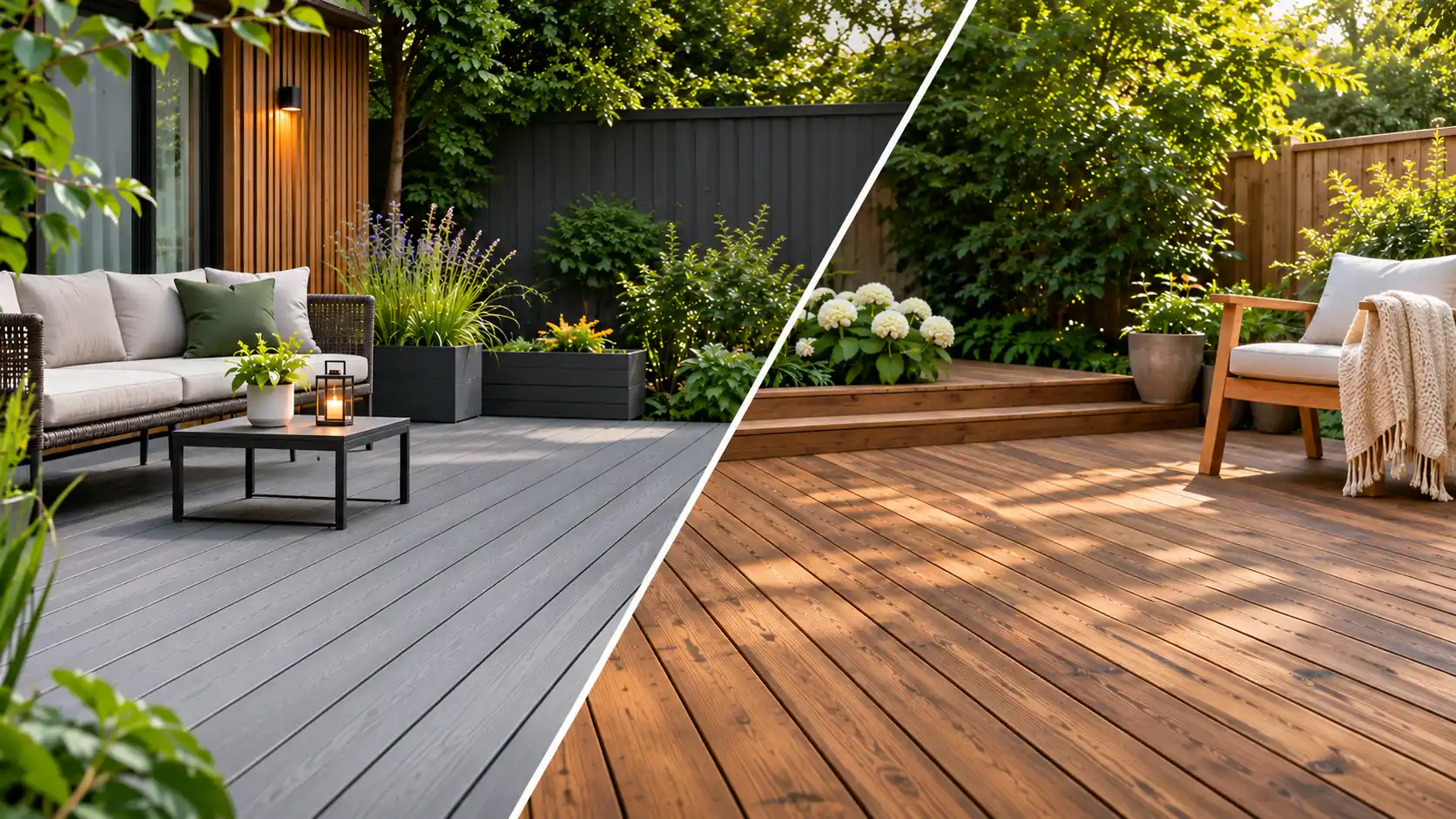
Choosing the right decking material can make a significant difference to the appearance, maintenance and long-term use of an outdoor space. Composite decking and traditional timber decking are two popular options, each offering different characteristics for gardens, patios and outdoor entertainment areas.
While timber provides a natural appearance, composite decking offers an alternative that combines wood fibres and plastic materials. Understanding the differences between composite decking vs timber decking can help homeowners, contractors and trade buyers select a suitable solution for their projects.
In this guide, we compare both materials, covering their appearance, durability, maintenance, cost and installation requirements to help you make an informed decision.
First, let’s understand how composite decking and timber decking differ.
Composite decking and timber decking are outdoor flooring materials designed for gardens, patios, terraces and other exterior spaces. Although both serve a similar purpose, they differ in their materials, appearance, maintenance requirements and manufacturing processes.
Composite decking is manufactured using a combination of wood fibres and plastic materials. It is designed to offer the appearance of traditional timber with different performance and maintenance characteristics.
Available in various colours, textures and finishes, composite decking can complement contemporary gardens, outdoor seating areas and commercial landscaping projects.
Timber decking is made from natural wood and is commonly used to create traditional outdoor flooring. Its natural grain, colour variations and organic texture make it a popular choice for garden terraces, patios and landscaped spaces.
Depending on the wood species and treatment, timber decking may require regular cleaning, staining, sealing or other maintenance to protect its appearance.
The main difference between composite decking and timber decking is their material composition. Composite decking combines wood fibres and plastic, while timber decking uses natural wood.
This difference influences their appearance, maintenance needs, installation methods and overall suitability for different outdoor projects.
When comparing composite decking vs timber decking, consider more than the initial appearance. Material composition, maintenance, durability and installation requirements can all influence the right choice for an outdoor project.
Composite decking is manufactured using a combination of wood fibres and plastic. Timber decking is produced from natural wood, with different species offering variations in grain, colour and texture.
Timber decking offers natural grain patterns and colour variations. Composite decking is available in a range of colours and finishes, including designs that replicate the appearance of natural wood.
Timber decking generally needs periodic maintenance, such as cleaning, staining or sealing, depending on the wood type and environmental exposure. Composite decking typically requires less routine maintenance, although regular cleaning is still necessary.
Both materials are exposed to outdoor conditions, including rain, sunlight and temperature changes. Their performance depends on product quality, material specifications, installation and ongoing care.
Composite and timber decking may require different fixing systems, subframe arrangements and installation methods. Always follow the manufacturer’s instructions and check product compatibility before beginning a project.
Both composite and timber decking offer practical options for outdoor spaces, but each has advantages and limitations. Understanding these differences can help buyers choose a material that suits their budget, design preferences and maintenance expectations.
The best option depends on your priorities. Composite decking may suit projects where lower routine maintenance is important, while timber remains an option for those who prefer the natural character of real wood.
Decking lifespan is an important consideration when planning an outdoor project. Both composite and timber decking can provide long-term use, but their durability depends on material quality, weather exposure, installation and maintenance.
Composite decking is designed for outdoor use and generally requires less routine maintenance than traditional timber. Its performance depends on the product’s composition, protective features and manufacturing quality.
Before purchasing, check the manufacturer’s expected service life, warranty conditions and care instructions.
The lifespan of timber decking varies depending on the wood species, treatment and environmental conditions. Regular maintenance can help protect the surface and reduce the effects of moisture and weather exposure.
Untreated or poorly maintained timber may experience issues such as decay, splitting and surface deterioration over time.
Regardless of the material, several factors influence how well decking performs over time:
Rather than relying on general lifespan estimates, compare individual product warranties and technical specifications before selecting decking for your project.
Budget is an important factor when choosing between composite decking and timber decking. However, comparing only the initial price can give an incomplete picture. Buyers should also consider installation expenses, maintenance and potential replacement costs.
Timber decking can have a lower upfront cost, particularly when using standard softwood boards. Composite decking may require a higher initial investment, depending on the product range, finish and board specifications.
Installation costs depend on the project size, ground preparation, subframe requirements and fixing system. Composite decking may require compatible clips and specific installation accessories, while timber decking uses fixings suited to the selected wood.
Timber decking may require regular cleaning, staining, sealing and occasional board replacement. Composite decking generally needs less routine maintenance, although cleaning and periodic inspections remain important.
The most cost-effective choice depends on your budget and long-term priorities. Timber may suit projects with a lower initial budget, while composite decking can appeal to buyers looking to reduce ongoing maintenance requirements.
For a more accurate comparison, calculate the complete project cost, including materials, installation, accessories and expected maintenance over the intended service period.
The appearance of your decking plays an important role in the overall design of an outdoor space. Both composite and timber decking offer different colours, textures and finishes to complement modern and traditional gardens.
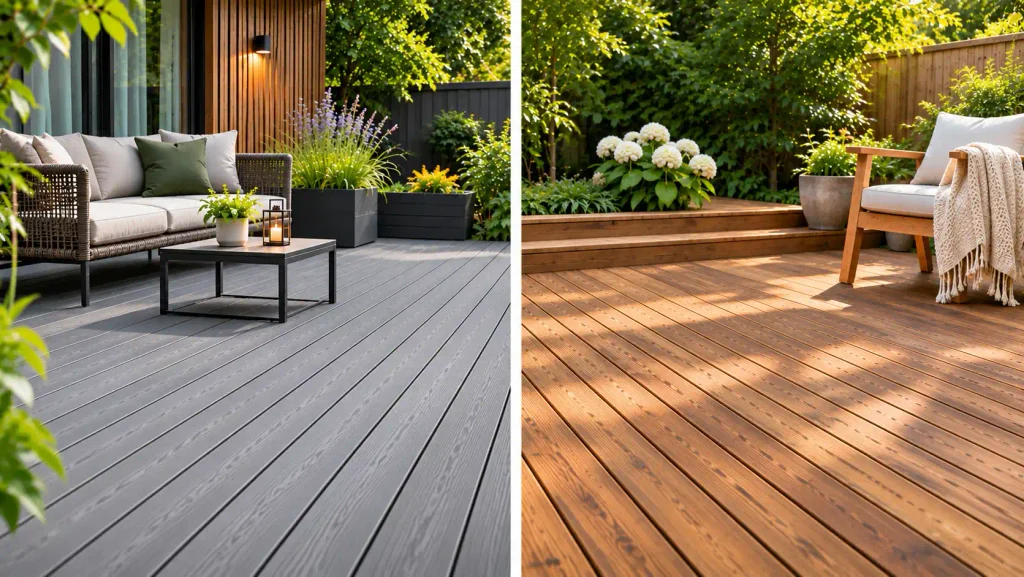
Composite decking is available in a variety of colours, including grey, charcoal, brown and natural wood-inspired shades. Different surface textures and board profiles allow homeowners and designers to create contemporary outdoor spaces.
Timber decking offers natural grain patterns, knots and colour variations that give each board a distinctive appearance. Different wood species and treatments create a range of finishes, from light natural tones to deeper brown shades.
Both materials can be incorporated into different landscaping styles. Consider these design ideas when planning an outdoor decking project:
Consider how the decking colour and finish will work with garden furniture, fencing, planters and exterior walls. Choosing complementary materials can create a more coordinated outdoor environment.
Ultimately, composite decking offers consistent manufactured finishes, while timber provides the natural variations of real wood. The right choice depends on your preferred style and project requirements.
Although composite and timber decking serve similar purposes, their installation requirements can differ. Understanding these differences helps contractors and installers plan the correct materials, fixing systems and supporting structures.
Both decking types require a suitable supporting structure. The subframe should provide adequate stability, ventilation and drainage for the selected decking system.
Composite decking often uses dedicated clips, fasteners and compatible accessories to secure the boards. Correct spacing is important because composite materials can expand and contract with temperature changes.
Always follow the manufacturer’s guidance for board spacing, fixing positions, ventilation and installation clearances.
Timber decking is commonly installed using suitable screws or other manufacturer-approved fixings. Board spacing should allow for natural movement and drainage, with the required gaps depending on the wood type and moisture conditions.
Good drainage and airflow beneath the decking help reduce moisture-related problems. Ensure the supporting structure is designed to prevent water from collecting around the boards and subframe.
Installation may require measuring tools, cutting equipment, compatible fixings and suitable subframe materials. Check the product instructions before purchasing accessories, as composite and timber systems may require different components.
For trade projects, reviewing the installation specifications before ordering can help prevent material mismatches and unnecessary delays.
Maintenance is one of the biggest differences between composite decking and timber decking. Understanding the care each material requires can help homeowners and trade buyers estimate long-term upkeep.
Composite decking generally requires simple routine cleaning to remove dirt, leaves and surface debris. Use suitable cleaning products and follow the manufacturer’s care instructions to maintain the board finish.
Timber decking usually requires more regular attention to protect its natural appearance. Depending on the wood type and treatment, maintenance may include cleaning, sanding, staining or applying a suitable protective sealant.
Both decking materials should be inspected periodically for dirt build-up, surface damage and drainage issues. Remove debris from gaps between boards and check that water can drain away properly.
Outdoor decking is exposed to changing weather throughout the year. Regular inspections can help identify loose fixings, damaged boards and areas where moisture may collect.
Composite decking may suit buyers looking for lower routine maintenance, while timber decking is a suitable option for those willing to invest time in preserving its natural finish.
The right decking material depends on your outdoor space, budget, design preferences and maintenance expectations. Both composite and timber decking can work well when selected and installed according to project requirements.
Composite decking may be a suitable choice for homeowners who want an outdoor surface with fewer routine maintenance requirements. Its range of colours and finishes also makes it suitable for contemporary garden designs.
Timber decking is worth considering if you prefer authentic wood grain, natural textures and traditional garden aesthetics. However, factor in the regular maintenance needed to preserve its appearance.
For commercial outdoor spaces, consider expected foot traffic, product specifications, maintenance requirements and installation conditions. The selected decking should meet the project’s performance and safety requirements.
Compare the initial material cost with installation expenses and expected maintenance. Review product warranties, technical specifications and availability before making a final decision.
There is no single option that suits every project. The best decking is the one that meets your design, budget and practical requirements.
Selecting decking without considering the project requirements can lead to unnecessary costs and maintenance issues. Before purchasing composite or timber decking, review the following common mistakes.
A lower purchase price does not always mean better long-term value. Compare material costs, installation expenses, maintenance requirements and potential replacement costs.
Decking products vary in composition, dimensions, surface finish and performance. Check the manufacturer’s specifications to confirm that the boards are suitable for your intended outdoor application.
Both composite and timber decking require suitable structural support. Using an incompatible subframe or incorrect spacing can affect installation quality and long-term performance.
Poor drainage can allow water to collect around decking boards and supporting structures. Plan adequate drainage and ventilation before installation begins.
Timber decking may require regular staining or sealing, while composite decking still needs routine cleaning. Consider the time and cost involved in maintaining your chosen material.
Review warranty coverage, exclusions and maintenance conditions before purchasing. This helps you understand the manufacturer’s product commitments and any requirements for maintaining coverage.
Careful planning and product comparisons can help buyers avoid common mistakes and select decking that meets their project’s requirements.
It depends on your priorities. Composite decking generally requires less routine maintenance, while timber offers a natural wood appearance. Compare cost, product specifications and maintenance requirements before choosing.
Composite decking can have a higher initial purchase price than some timber options. However, timber may involve additional maintenance expenses over time. Compare the complete project cost rather than the material price alone.
Composite decking may experience some colour changes due to sunlight and weather exposure. The extent varies by product, so check the manufacturer’s specifications and warranty conditions.
Yes. Depending on the wood type and treatment, timber decking may require periodic cleaning, staining, sealing or other protective treatments to maintain its appearance.
Yes. Composite decking is available for outdoor applications in the UK. Check the manufacturer’s weather suitability, installation requirements and maintenance guidance before purchasing.
Composite decking generally requires less routine maintenance than timber. It typically needs regular cleaning, while timber may also require staining or sealing.
Yes. Many composite decking products feature wood-inspired colours, grain patterns and textured finishes designed to create a natural timber appearance.
Choosing between composite decking and timber decking depends on your budget, preferred appearance, maintenance expectations and outdoor project requirements. Both materials offer different advantages for gardens, patios and outdoor entertainment areas.
Composite decking is worth considering if lower routine maintenance and consistent finishes are important. Timber decking remains an option for those who prefer the natural appearance and character of real wood.
Before making a decision, compare product specifications, installation requirements, warranties and overall project costs.
Explore GretaGrove to discover outdoor surface solutions and find suitable products for your next decking project.